Why Do People Get Tattoos? 10 Common Reasons Explained
Tattoos speak louder than most conversations. They announce passions, mark struggles, and immortalize the people we refuse to forget.
People chase permanent ink for reasons as layered as the skin that holds it.
Psychologists, sociologists, and dermatologists have all dug into that question.
Their answers cluster around a few powerful truths: identity, memory, beauty, control, healing, and belonging.
1. Personal Meaning Commands the Canvas
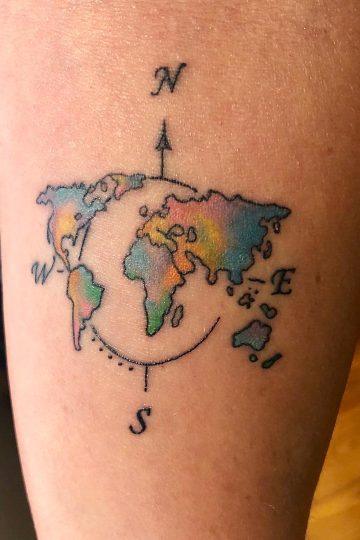
A tattoo becomes a permanent landmark of a feeling or fact.
Researchers consistently find that honoring a significant experience is the single most-reported reason for getting inked.
In one study, a full quarter of participants said their tattoo marked a meaningful event, often a loss or a personal victory.
People carry these marks like private touchstones—a heartbeat line from a father’s final hospital visit, lyrics that pulled you through a dark winter, the date you walked away from something toxic.
The design holds a memory so heavy that words alone cannot carry it.
A tattoo fixes that memory in place and lets you carry it forward openly.
2. Ink Writes the Story of Who You Are
People use tattoos to build and broadcast their identity.
A large multi‑center study found that the top motivations for getting tattooed were to be an individual, to feel better about oneself, and to express oneself.
Those three motives share a single drive: the need to shape a self that feels authentic.
Women in that study scored especially high on the desire to be an individual and to have a beauty mark, suggesting that ink helps women reclaim agency over a body that culture constantly tries to police.
The skin becomes the page, and the design becomes the sentence you want the world to read.
3. Self-Expression Does Not Need a Translator
Tattoos allow people to communicate without speaking a single word.
Clothing and hairstyles shift with trends, but a tattoo stays put.
It broadcasts your passions, values, or sense of humor the moment you roll up a sleeve.
That permanent visibility acts like a filter.
It attracts people who resonate with your signal and politely warns off those who do not.
4. Healing From Trauma Starts With Reclaiming the Body
Trauma can turn the body into enemy territory.
Survivors of assault, combat, and abuse often describe a profound disconnection from their own physical self.
Tattooing becomes a way to reclaim that turf.
Research on sexual trauma recovery shows that many survivors pursue tattoos specifically to regain control of their bodies and environment.
The physical sensation of the needle—something the person chooses—reprograms the body’s alarm system.
It says, “I decide what happens to this skin.”
The process itself functions as a non-traditional form of therapy, one that pairs perfectly with professional mental health support.
5. The Mind Finds Relief in the Ink
Tattoos can genuinely shift a person’s emotional baseline.
Mental health experts explain that ink helps people navigate grief, trauma, and complicated feelings by giving them a visible step forward.
Anxiety about one’s physique drops immediately after getting a tattoo and stays lower for weeks.
The semicolon movement offers a public example.
For many, that simple mark creates an internal shift, allowing them to say, “I survived—and I choose to keep going.”
That shift is not cosmetic.
It is neurological reassurance, carved into the skin.
6. Aesthetics and Art Command Their Own Currency
Not every tattoo needs a tragic backstory.
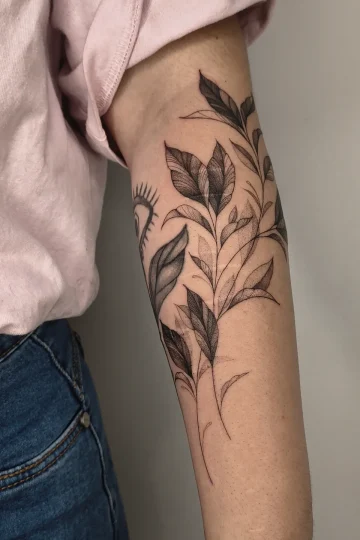
Sometimes a superb piece of art on the forearm is enough.
Research confirms that looking good is one of the most common motivations for getting inked.
Some clients select designs purely because they admire a specific art style or wish to wear a masterpiece on their skin.
People collect ink the way others collect paintings, but the gallery lives on their body.
That instinct is ancient: cultures have decorated skin for beauty and status for over 5,000 years.
Pure aesthetic pleasure drives a huge share of appointments, and that is reason enough.
7. Memorial Tattoos Preserve Love in Living Color
Grief demands a physical outlet.
Data shows that a large majority of tattooed Americans carry at least one design that remembers or honors a specific person.
Portrait tattoos, hand-drawn bouquets from family members, bands around ring fingers, or even ink mixed with a loved one’s ashes transform absence into presence.
The design becomes a conversation starter, keeping the departed woven into daily life.
This is not just sentiment.
It is a deliberate act of memory management that helps the bereaved feel the person is still walking beside them.
8. Body Image Improves One Tattoo at a Time
People who struggle with body dissatisfaction often discover that ink rewrites their relationship with the mirror.
Getting tattooed helps people feel closer to their physical self, boosting overall mental health.
Tattoos offer autonomy, especially for those recovering from self-harm scars or surgical changes.
Skilled artists convert mastectomy scars into beautiful floral designs, transforming a source of pain into a point of pride.
For some transgender individuals, reconstructive tattooing after top surgery can be profoundly affirming, bringing instant peace and making the body finally feel whole.
Ink gives people permission to stop hiding and start loving the skin they inhabit.
9. Social Belonging and Rites of Passage Endure
Tattoos mark membership.
In Polynesian cultures, traditional designs signaled power, honor, and identity for thousands of years.
Modern versions still function as tribal markers—matching ink among military units, sorority sisters, or running crews.
Family tattoos, like a shared symbol across grandparents, parents, and grandchildren, cement generational loyalty.
The drive to show commitment to a group appears as a strong motivation, particularly among younger recipients.
The design signals to the world: I belong to this circle.
10. Rebellion and Independence Still Matter
Tattoos have always carried a slight edge.
Historically, Western society labeled them deviant.
Today, most people say society has become more accepting of tattoos, but the ink retains a quiet defiance.
The drive to feel independent ranks among the highest motivations for getting tattooed.
Those who seek out professional artists often score higher on the desire to be an individual.
The act itself—choosing to permanently alter your body despite lingering workplace bias—asserts autonomy.
That small act of rebellion can be deeply satisfying, especially for people who have spent years feeling powerless.
Wrapping Up
People get tattoos to feel more like themselves.
They reach for ink to claim their body, to freeze a memory, to speak without words, to belong to a tribe, to heal from wounds, and to wear art they love.
The reasons overlap and combine, rarely existing in pure isolation.
A single tattoo can honor a dead parent, signal queer pride, and look stunning—all at once.
The skin carries layer after psychological layer.
The next time you spot ink on a stranger, resist the urge to judge.
Instead, understand that you are looking at a deliberate act of self-creation.
That design earned its place through careful thought, physical pain, and a genuine human need to leave a mark.