22 Pixie Cuts That Flatter Older Women With Fine Hair in 2026
Stylists often recommend pixies to older women with fine hair, and there's a good reason. Short cuts eliminate the limp, stringy appearance that fine hair develops at longer lengths. The trade-off is real, though. A pixie that's cut too close to the scalp can expose thinning areas instead of disguising them. The cuts below work around that risk. Some keep the top longer for coverage and styling versatility. Others rely on layered texture to build apparent thickness through the crown. A few lean into a softer, feathered finish that grandmothers and grandmothers-to-be both recognize as flattering. One or two need only a quick finger-styling routine in the morning.
Jump to:
- Classic Layered Pixie
- Pixie With Side-Swept Bangs
- Textured Pixie With Choppy Layers
- Soft Feathered Pixie
- Pixie With Wispy Bangs
- Asymmetrical Pixie
- Pixie With Curtain Fringe
- Pixie With Longer Top and Tapered Sides
- Cropped Pixie With Soft Bangs
- Pixie With Babylights
- Pixie With Grey Blending Highlights
- Pixie With Tapered Nape
- Pixie With Volume on Top
- Pixie With Side Part and Brushed-Back Top
- Salt and Pepper Pixie
- Pixie With Silver Highlights
- Pixie With Razored Texture (Modified)
- Pixie With Forward-Swept Style
- Pixie With Layered Crown
- Pixie With Subtle Highlights and Lowlights
- Pixie With Short Sides and Longer Crown
- Soft Pixie With Curved Sides
Classic Layered Pixie
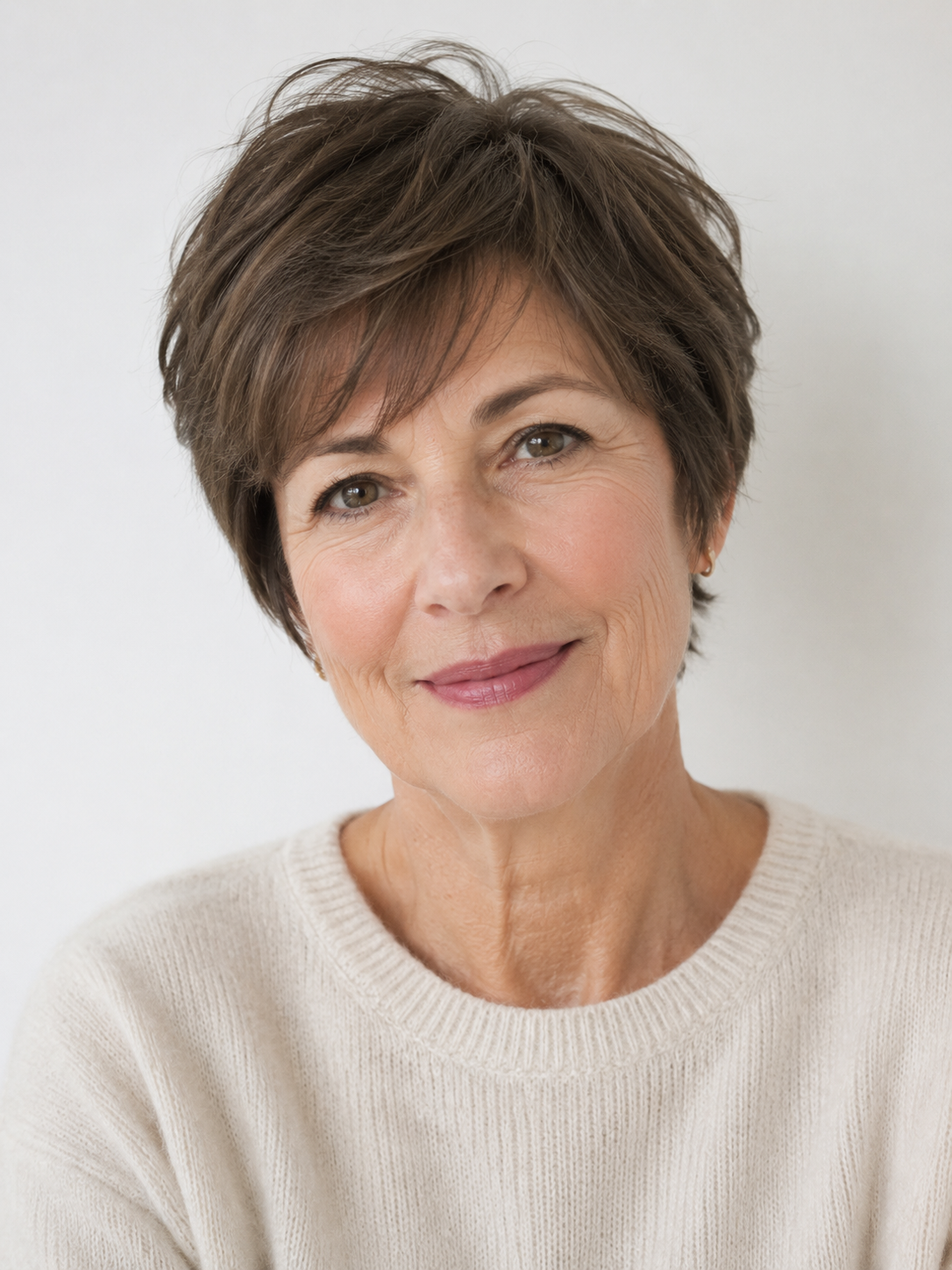
The classic layered pixie keeps the top section slightly longer than the back and sides, with soft layering throughout for movement. This version stays away from any close-cropped exposure at the crown, which protects fine hair from looking sparse. Style with a small amount of styling cream worked through damp hair and finger-dried into place. The shape suits most face types and grows out gracefully between salon visits.
Pixie With Side-Swept Bangs
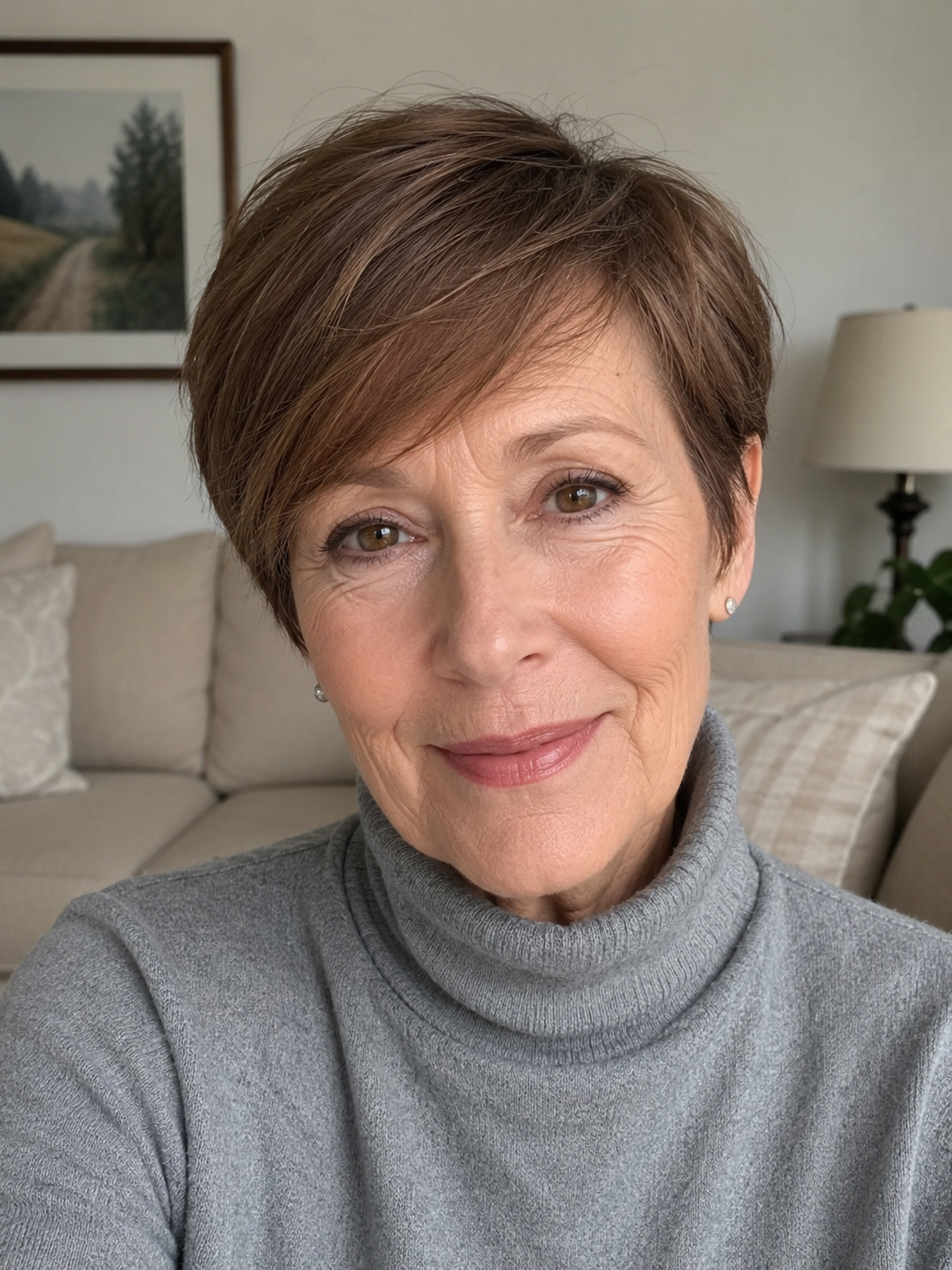
Side-swept bangs draw the eye diagonally across the forehead, which softens any thinning around the hairline. The bangs angle from a deep side part toward the opposite temple. Have your stylist cut them slightly longer than typical so they have movement and don't look stuck against the forehead. A round brush flicked under during blowdrying sets the sweep in place for the day.
Textured Pixie With Choppy Layers
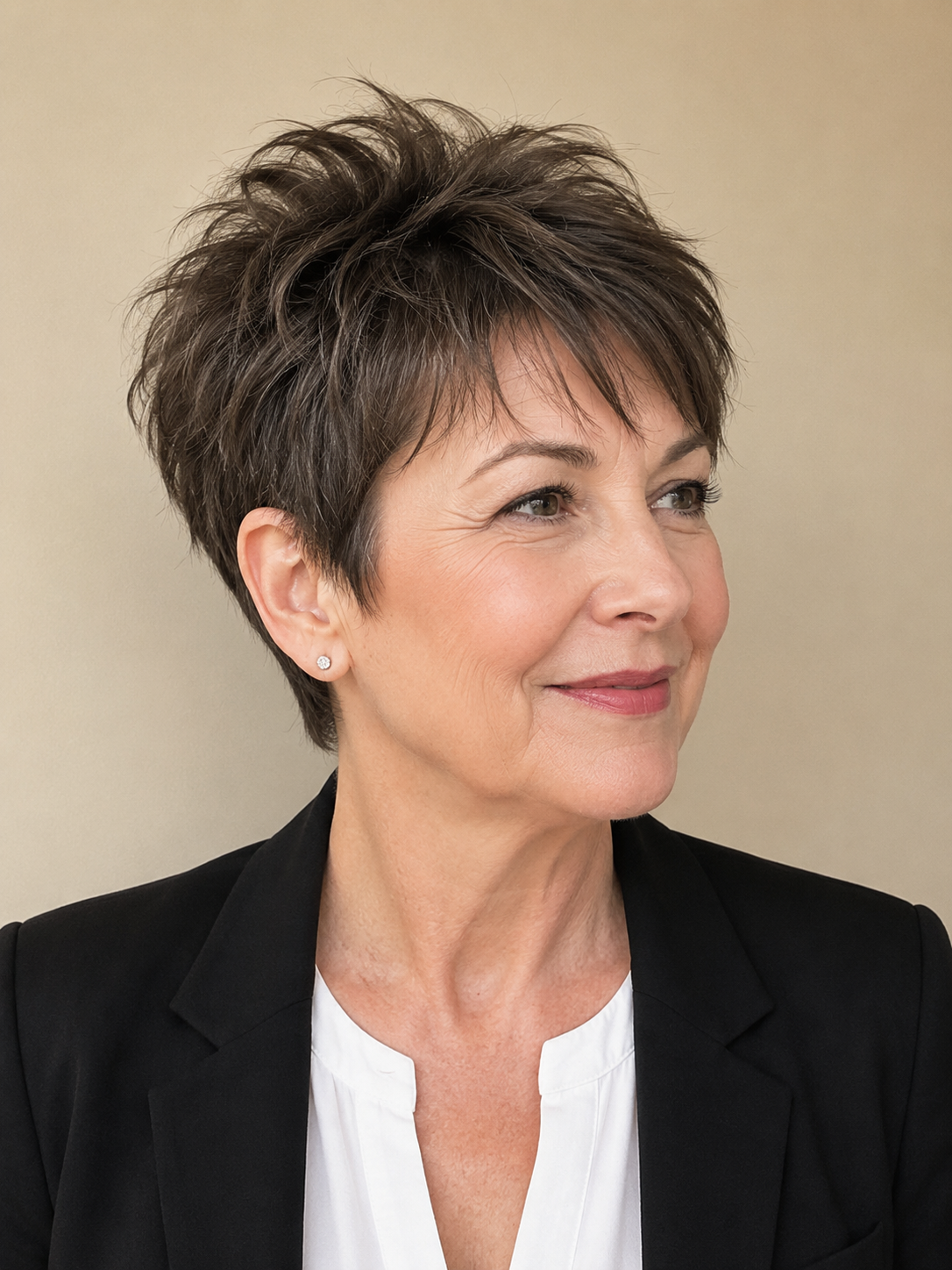
Choppy layered texture concentrated through the top section adds visible volume to fine hair at the crown, where it's needed most. The choppy effect should feel piecey rather than sharp. Style with texture spray worked into the crown and finger-styled into position. Avoid heavy pomades or waxes that flatten the choppy layers within hours. This version requires regular salon visits, around every six weeks.
Soft Feathered Pixie
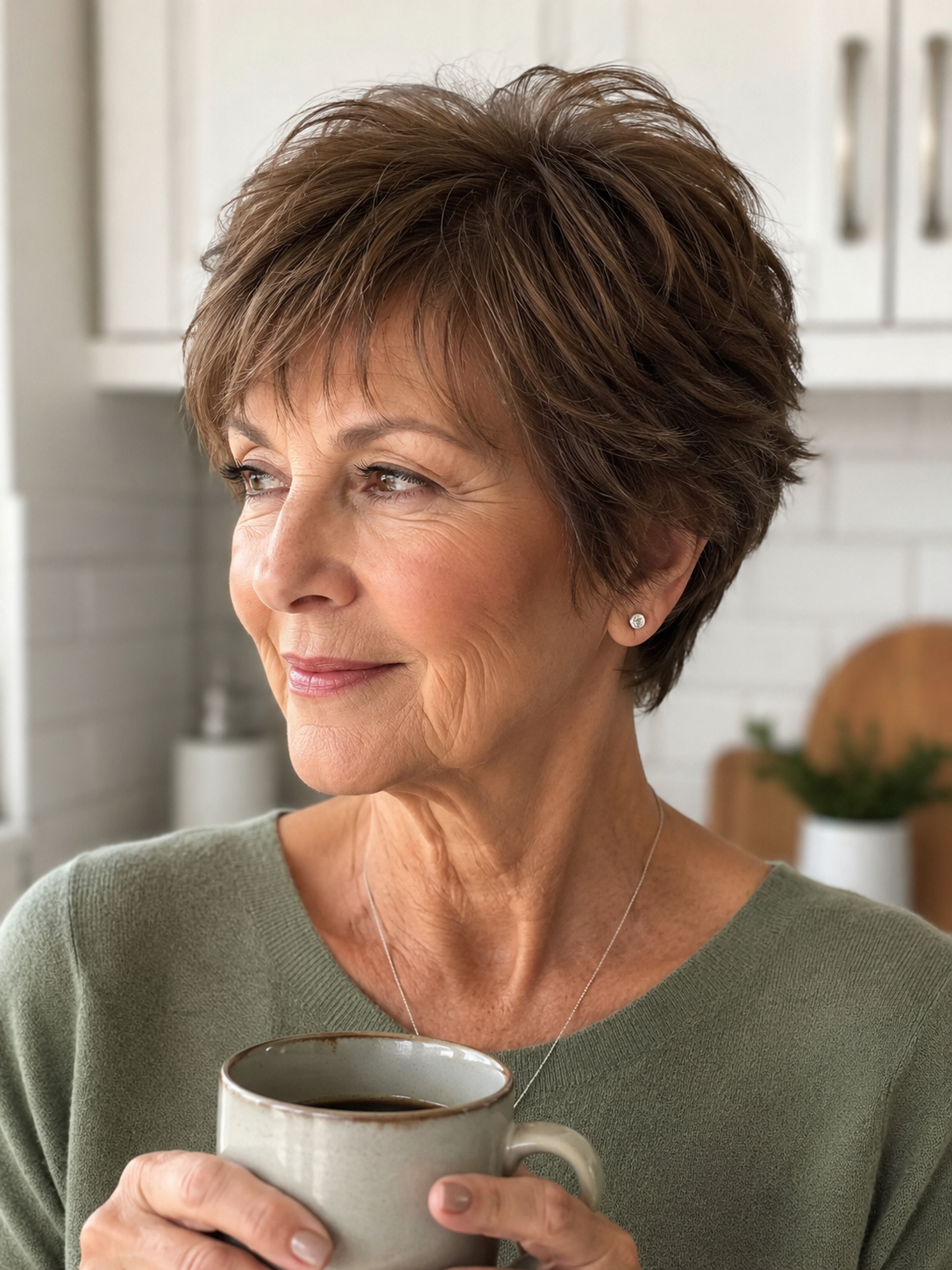
A soft feathered pixie uses gentle layering throughout with no harsh edges or aggressive texturing. The result reads gentle and polished rather than edgy. This is the most universally flattering version for women new to pixie cuts. Style with a leave-in spray and a soft round brush, working the layers into a smooth feathered finish. The shape almost styles itself once the cut is done correctly.
Pixie With Wispy Bangs
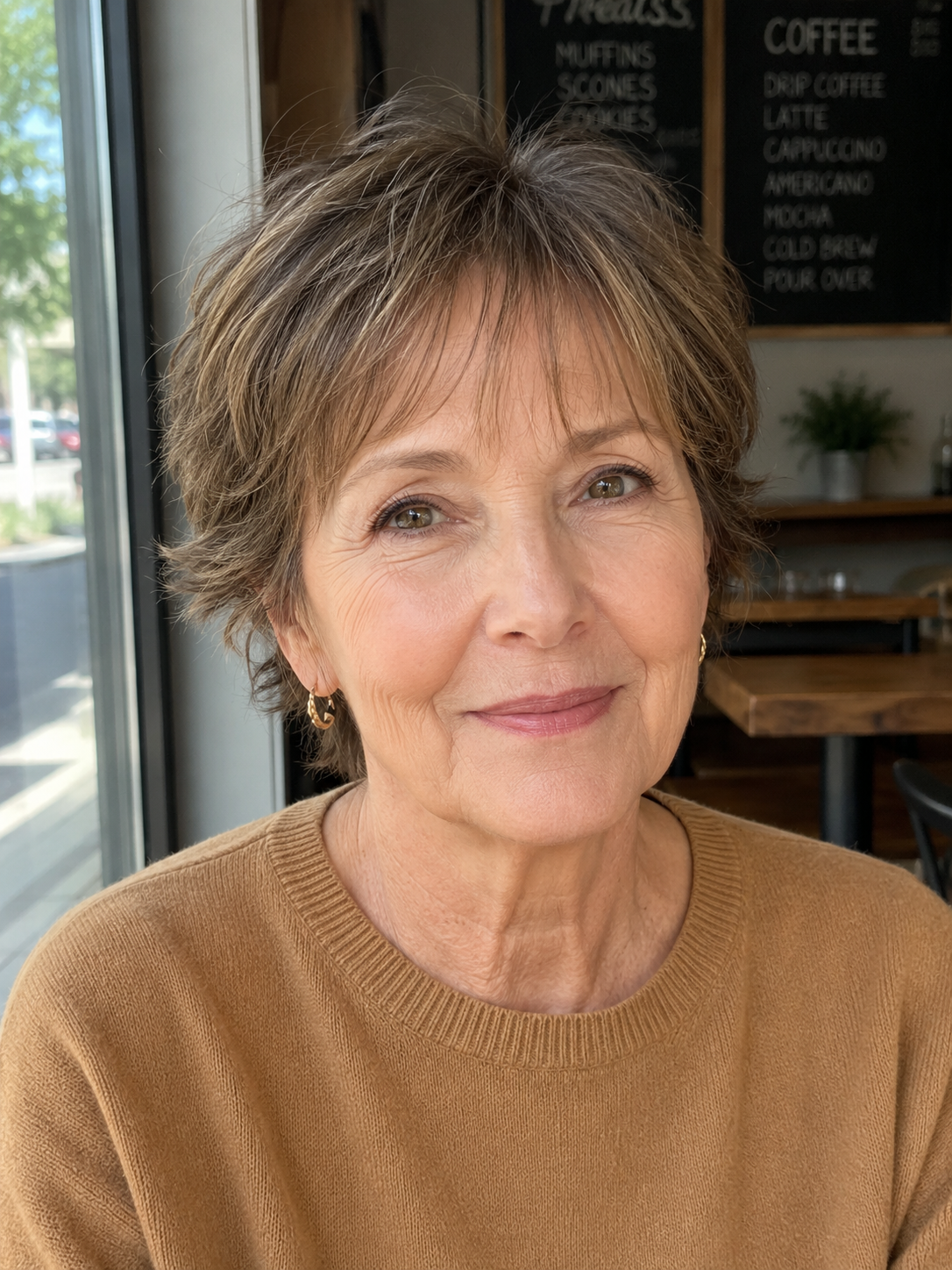
Wispy bangs sit lighter and more separated than full fringe, framing the forehead without bulk. On fine hair, wispy works better than dense because dense bangs can read flat as the day progresses. Pair with a slightly longer pixie body for balanced proportions. Style the bangs with a small amount of texture cream warmed between fingers and pressed through to keep them piecey.
Asymmetrical Pixie
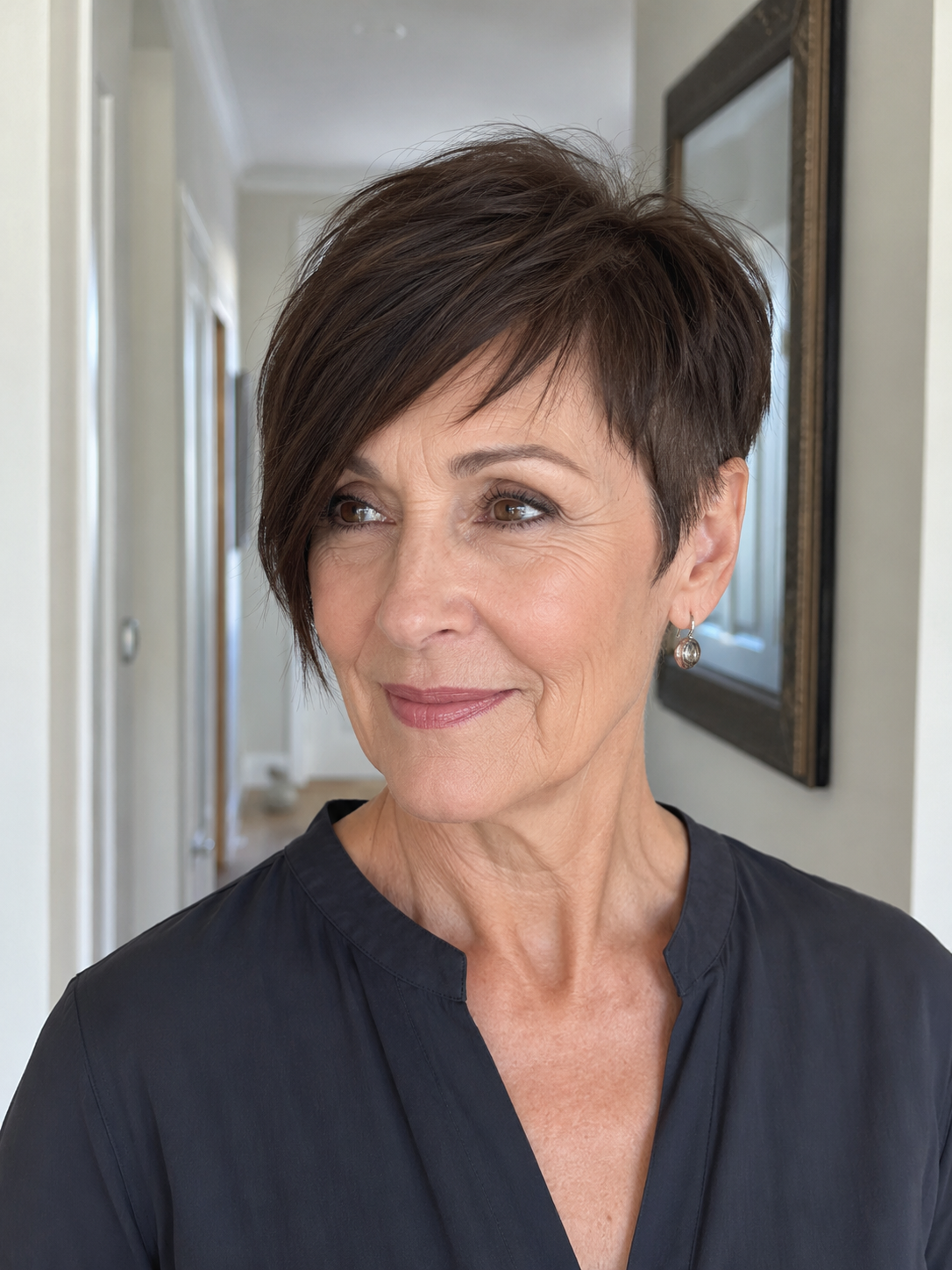
An asymmetrical pixie cuts longer on one side than the other, with the longer section sweeping across the forehead or covering one ear slightly. The asymmetry creates visual interest and disguises any thinness at the temples. This works particularly well on women with strong jawlines or angular face shapes. Style with a flat iron flicking the longer section into place, then finish with a light hold spray.
Pixie With Curtain Fringe
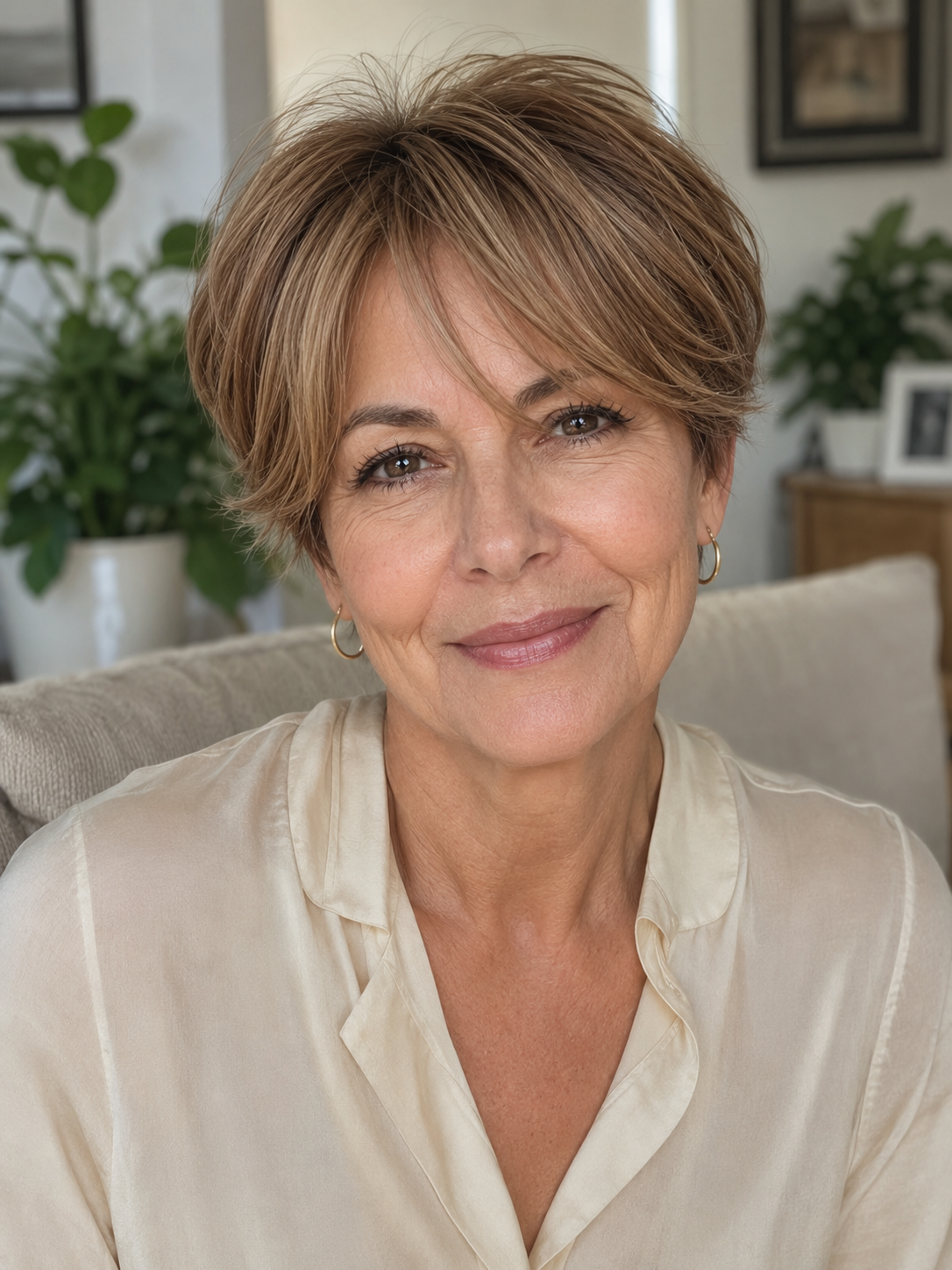
Curtain fringe splits at the center and sweeps outward toward the cheekbones, similar to curtain bangs but adapted for shorter cuts. The shape softens the forehead and adds dimension to the front of the pixie. Have your stylist cut the fringe with point cutting at the ends to keep it from looking too defined. A round brush rolled outward during styling sets the curtain shape.
Pixie With Longer Top and Tapered Sides
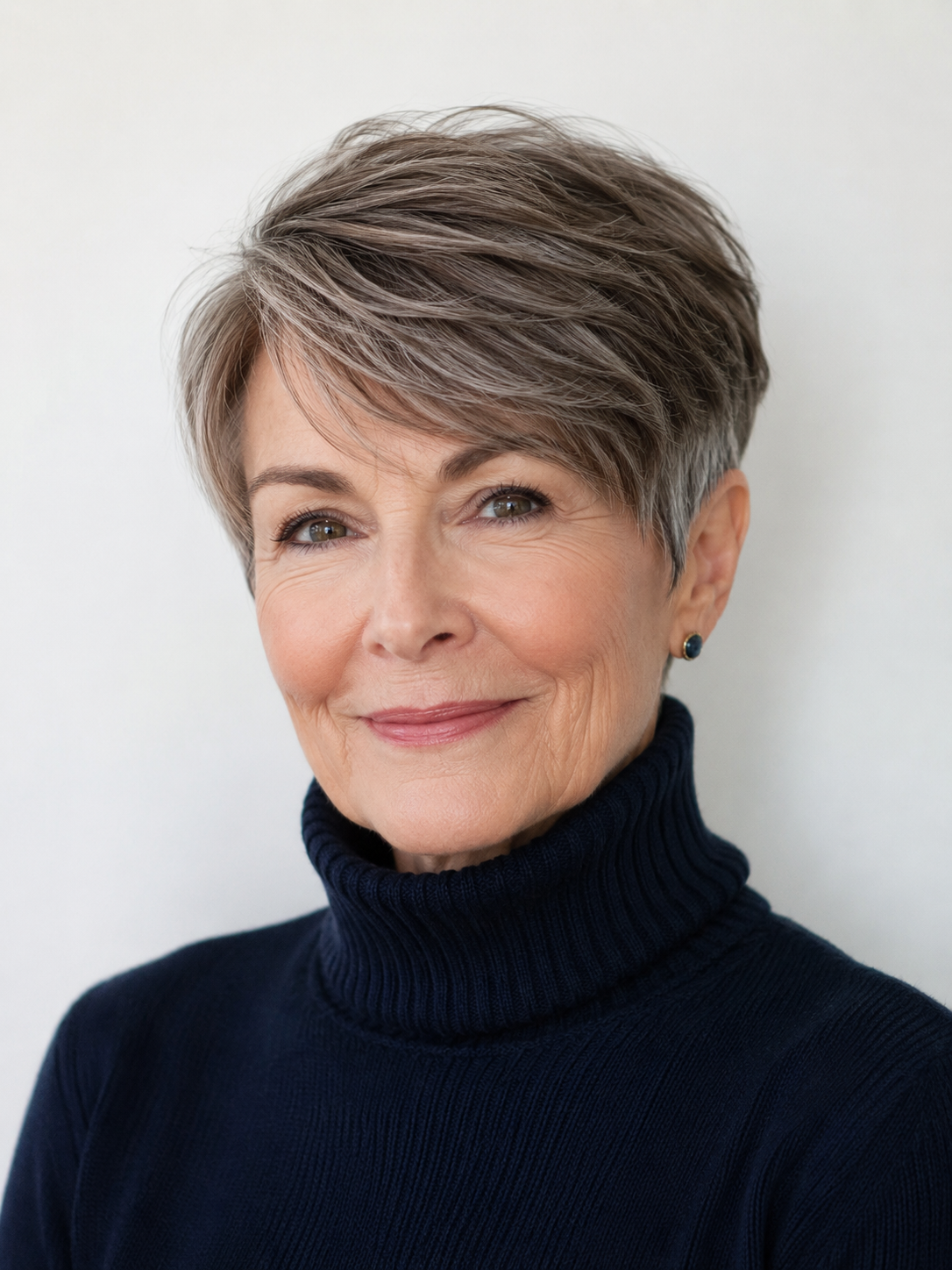
Keeping the top of the pixie significantly longer than the sides creates contrast that flatters fine hair. The longer top sections can be styled in different directions for daily variety. Tapered sides keep the shape clean and modern. Style with a texture paste worked through the top and brushed into the preferred direction. This version requires more daily styling than other pixies on this list.
Cropped Pixie With Soft Bangs
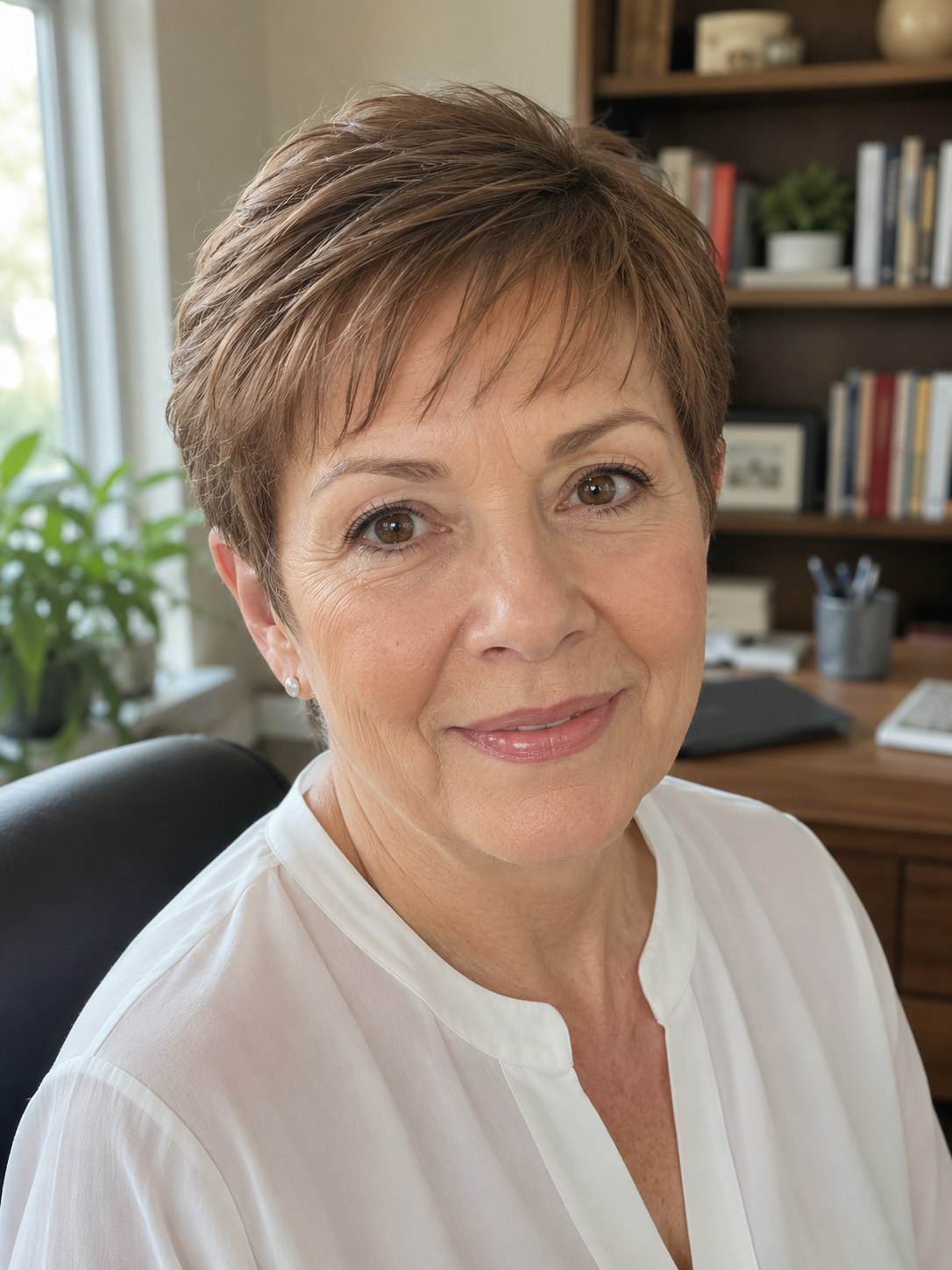
A cropped pixie sits closer to the head than the classic version. Adding soft bangs softens what could otherwise look severe on fine hair. The bangs should be light and feathery rather than blunt. Style with a small amount of styling cream worked through damp hair and a quick finger-comb. This is one of the lowest-maintenance options for women who want a wash-and-go routine.
Pixie With Babylights
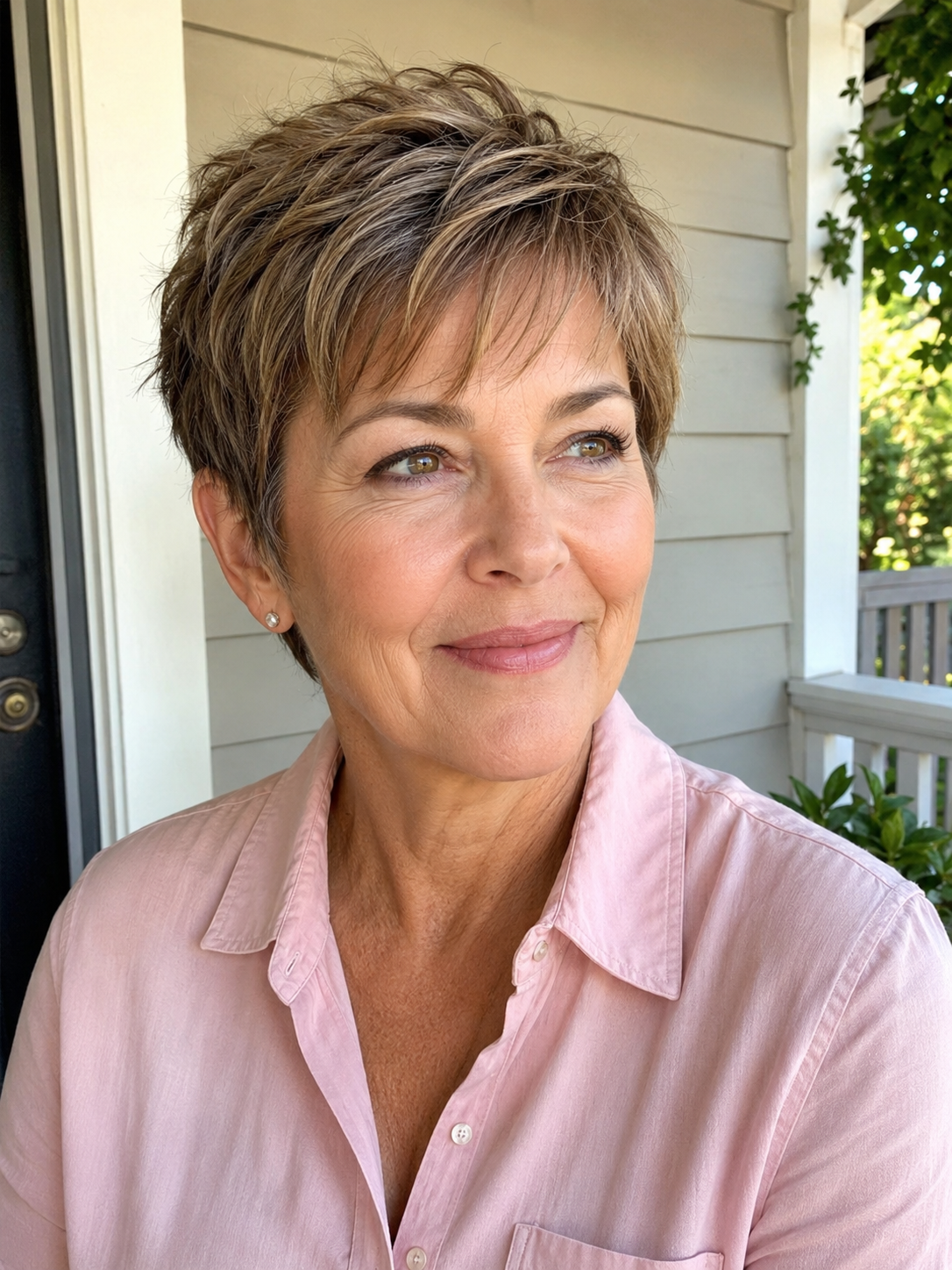
Babylights are ultra-fine highlights painted in delicate sections to add dimension without harsh contrast. On fine pixies, they create the illusion of more density through tonal variation. The technique requires a colorist who works in slow, painted sections rather than foiled blocks. Pair with any pixie variation for added polish. Use a toning shampoo monthly if the babylights pull warm.
Pixie With Grey Blending Highlights
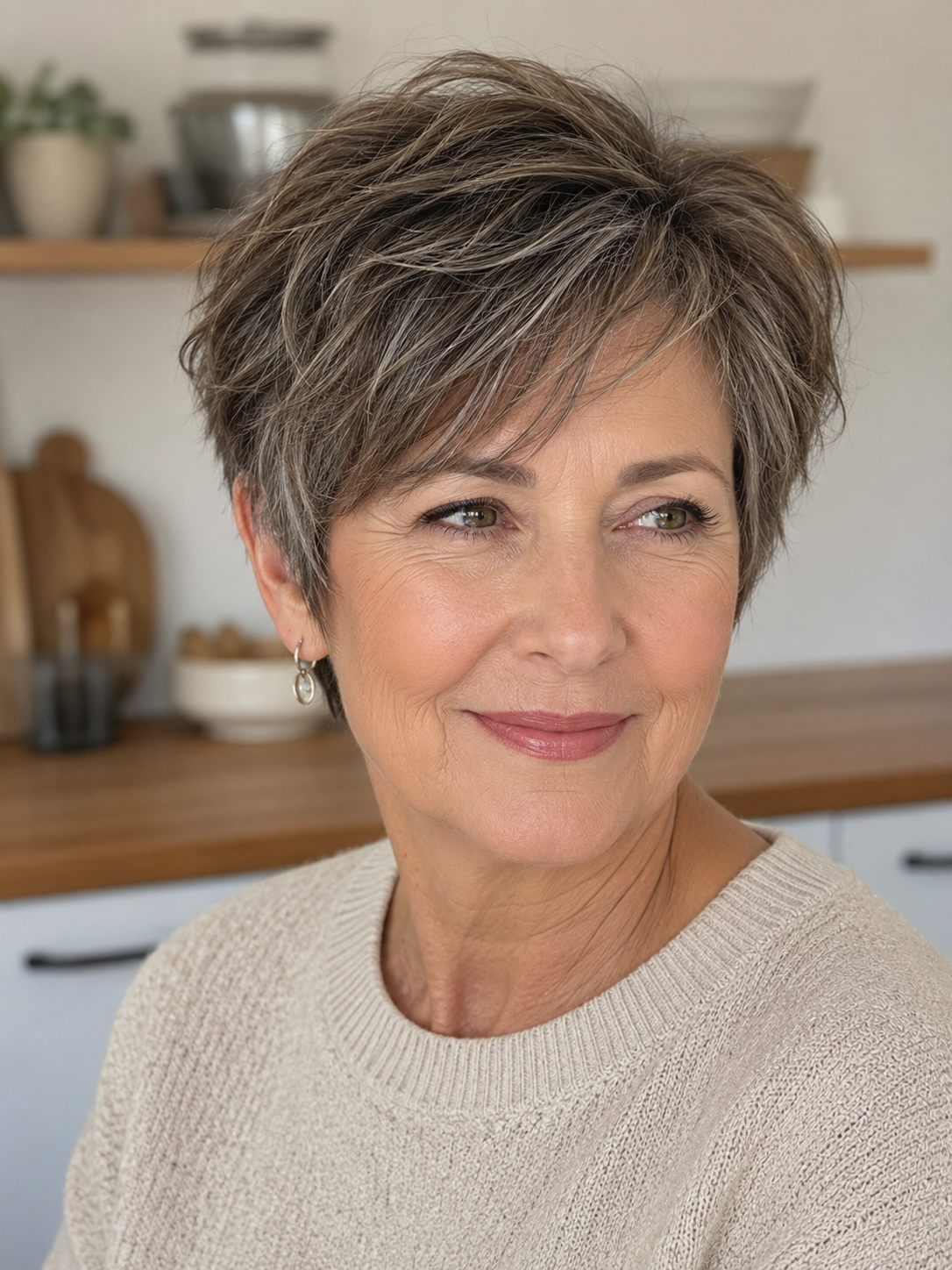
Grey blending highlights work beautifully on pixie cuts because the shorter length showcases the dimensional color throughout. For women whose grey is between 30 and 60 percent, blending creates a softer transition than full coverage. Pair with a soft layered pixie body for the most polished result. The grow-out is forgiving since regrowth blends naturally into the existing tones.
Pixie With Tapered Nape
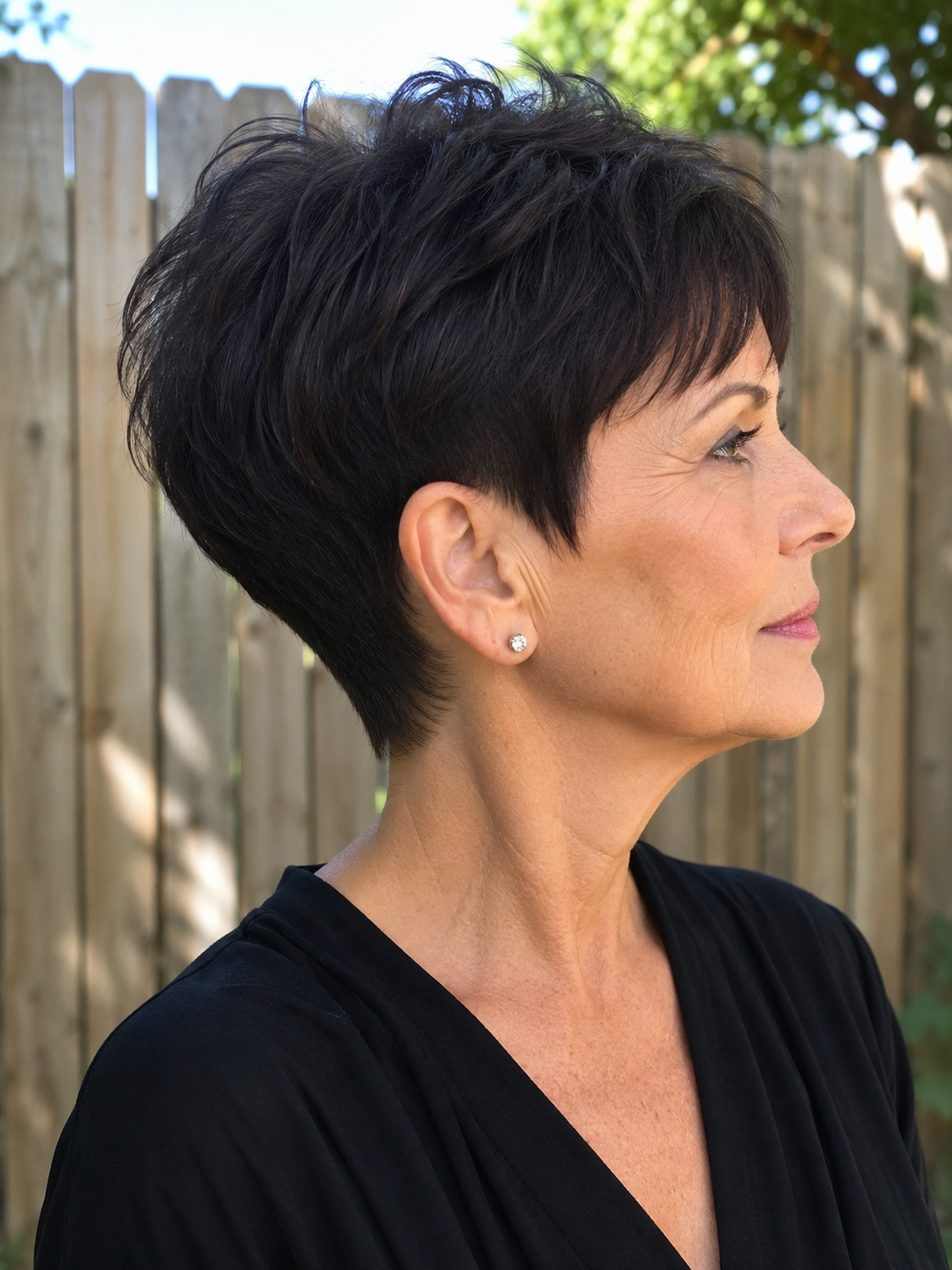
A tapered nape gradually shortens the hair toward the neck, creating a clean architectural finish at the back of the cut. This works particularly well for women with longer necks who want to showcase the line. Style with a small amount of pomade smoothed against the tapered section. The shape requires consistent maintenance, around every five to six weeks, to keep the taper crisp.
Pixie With Volume on Top

Volume on top is the most direct fix for fine hair appearing flat at the crown. The cut keeps the top section longer with internal layering specifically designed to lift. Style by blowdrying upside down before flipping back and finger-styling into place. A volumizing mousse worked into damp roots gives the lift staying power. This is the most effective pixie variation for visibly thinning crowns.
Pixie With Side Part and Brushed-Back Top

Brushing the top section back from a defined side part creates a clean, polished look that suits older women in professional settings. The brushed-back top draws the eye upward, which counteracts the visual heaviness fine hair can develop. Style with a styling cream and a wide-toothed comb. Set with a light hairspray to keep the brushed-back shape in place.
Salt and Pepper Pixie

For women fully embracing their grey, a salt and pepper pixie celebrates the natural color rather than blending or covering. The cut works because shorter lengths display the mixed tones beautifully. Skip any color treatment entirely and focus on a flattering cut. Use a purple shampoo every couple weeks to keep the silver portions from pulling yellow. The look reads sophisticated and modern.
Pixie With Silver Highlights

Silver highlights work as the opposite of grey blending: adding intentional silver to brunette or blonde pixies rather than covering existing grey. The technique celebrates the silver aesthetic without requiring a full color transition. Place the highlights through the top and surface layers where they catch the most light. Maintenance involves toning glazes every two months to keep the silver cool and clean.
Pixie With Razored Texture (Modified)

A modified razored pixie uses light razoring concentrated only through the top, with the perimeter cut traditionally with scissors. The light razoring creates surface movement without fraying the entire cut. Heavy razoring damages fine hair, so the modified version is critical. Style with texture spray and a small amount of finger work. This version reads contemporary without sacrificing density.
Pixie With Forward-Swept Style

Forward-swept styling pushes the top section toward the forehead rather than back or to the side. The direction creates a softer, more youthful silhouette and reduces forehead exposure. This works particularly well for women with high foreheads or thinning at the hairline. Style with a styling cream and brush the top forward, then break up the line with fingertips for a softer finish.
Pixie With Layered Crown

A pixie with extra layering concentrated specifically at the crown addresses the most common fine hair complaint at this length. The crown layering creates lift and movement where fine hair loses density first. Style by lifting the crown sections with fingers during blowdrying and setting with a light hairspray. This is the technical specification to ask for during consultation, not always something stylists default to.
Pixie With Subtle Highlights and Lowlights

Combining both highlights and lowlights creates more dimensional depth than highlights alone. On fine pixies, the contrast between lighter and darker pieces tricks the eye into perceiving more density. Keep the tones within the same color family for the most natural result. The technique works on brunette, blonde, and grey-blended pixies equally well. Refresh every ten to twelve weeks.
Pixie With Short Sides and Longer Crown

Cutting the sides shorter than the crown creates a deliberate contrast that flatters older women without looking dated. The longer crown can be styled smooth or textured depending on the day. Style with a paste worked through the top section and brushed into the preferred direction. The shorter sides require consistent trimming, around every five to six weeks, to maintain the contrast.
Soft Pixie With Curved Sides

Some pixies cut the sides flat against the head, but a softer version curves the sides gently to follow the head shape. The curved cut feels more feminine and works better with fine hair than sharp angular sides. Style with a leave-in spray and a soft brush, smoothing the sides while lifting the top. This is one of the most flattering versions for round or oval face shapes.