19 Pixie Haircuts That Solve Fine Thin Hair After 50
Fine and thin aren't the same thing. Fine refers to the width of each individual strand. Thin refers to how many strands are actually on your head. After 50, most women have both, which is why the pixie keeps coming up in stylist recommendations. Shorter length stops weighing down limp fine strands, and strategic cutting builds the volume thin density lacks. The variations below all earn that double work differently. Some use razor texturizing at the crown for airy lift. Others use tapered sides paired with longer top sections for visible contrast. A few rely on color techniques to fake the density the cut alone can't deliver. One or two work specifically with bangs.
Jump to:
- Layered Pixie With Crown Lift
- Razor-Textured Pixie
- Pixie With Side-Swept Fringe
- Tapered Pixie With Longer Top
- Wispy Feathered Pixie
- Choppy Textured Pixie
- Pixie With Curtain Bangs
- Pixie With Babylights
- Pixie With Money Piece
- Pixie With Grey Blending
- Salt and Pepper Pixie
- Asymmetrical Pixie
- Pixie With Deep Side Part
- Wedge-Shaped Pixie
- Sleek Brunette Pixie With Side Part
- Pixie With Subtle Undercut
- Slicked-Back Pixie
- Side-Swept Blonde Pixie With Fringe
- Soft Salt and Pepper Pixie
Layered Pixie With Crown Lift
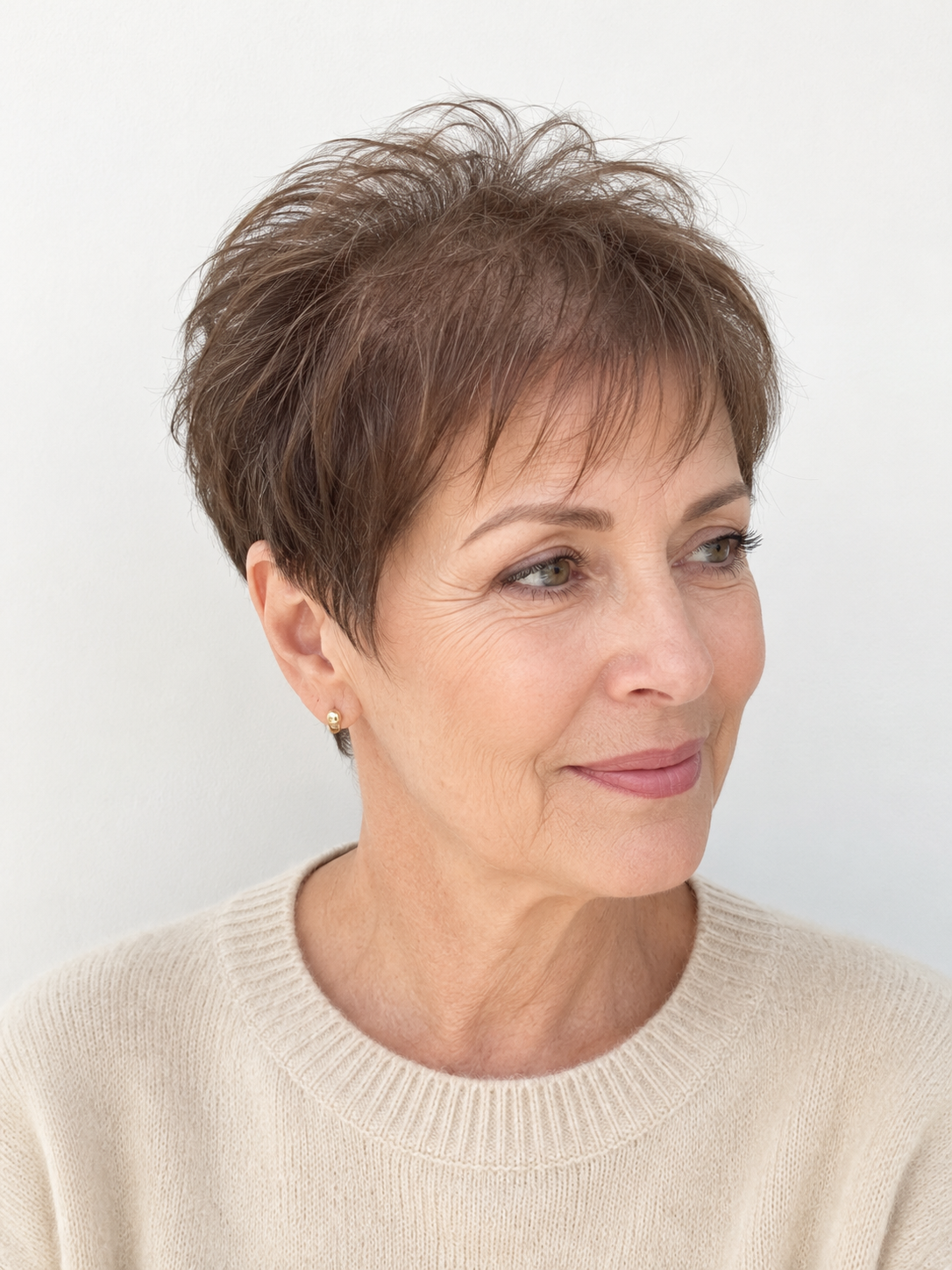
The foundational pixie for this demographic. Internal layering concentrates specifically at the crown to build visible lift. The top stays around an inch or two long while the sides taper down cleanly. Style with a lightweight volumizing mousse worked into damp roots and a small round brush during blowdrying. The shape itself does most of the volume work once cut correctly. Ask for layered structure with the lift concentrated at the crown.
Razor-Textured Pixie

A pixie with light razor work concentrated through the top section, creating soft separated piecey lift. The razor texturizing builds airy movement that disguises any flat areas. Style with a dry texture spray scrunched through the top and finger-styled. Heavy razoring damages aging hair, so the modified version stays restrained and uses razoring only on the surface. Best for women whose fine hair holds shape well with the right product but falls flat with anything heavy.
Pixie With Side-Swept Fringe
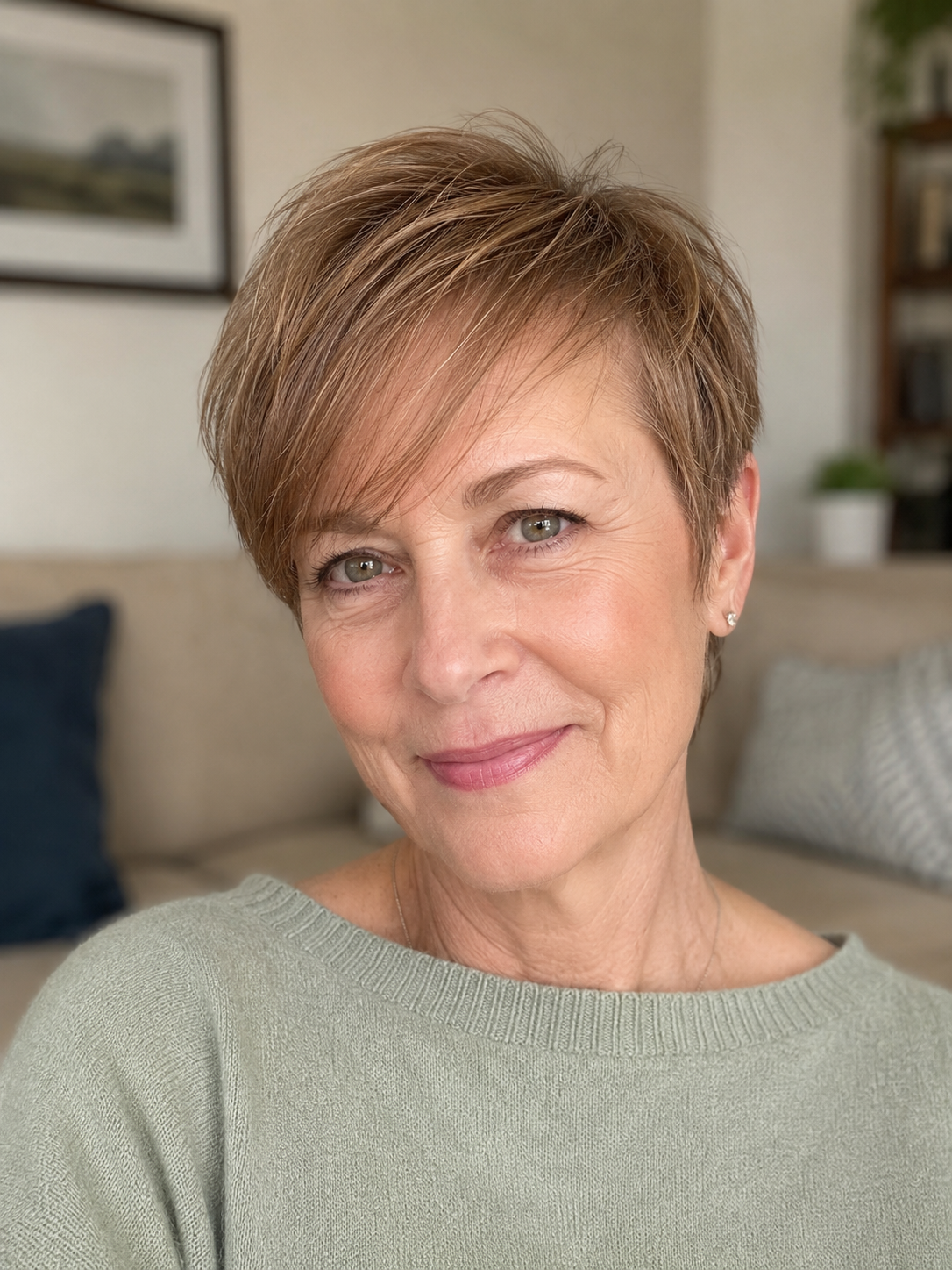
A pixie with a side-swept fringe angling from a deep side part across the forehead. The diagonal line softens the cut and disguises any thinning at the temples and hairline. The longer fringe section can conceal small crown cowlicks while keeping the silhouette clean. Style by blowdrying the fringe with a round brush in the direction of the sweep. Set with a light hairspray at the part.
Tapered Pixie With Longer Top
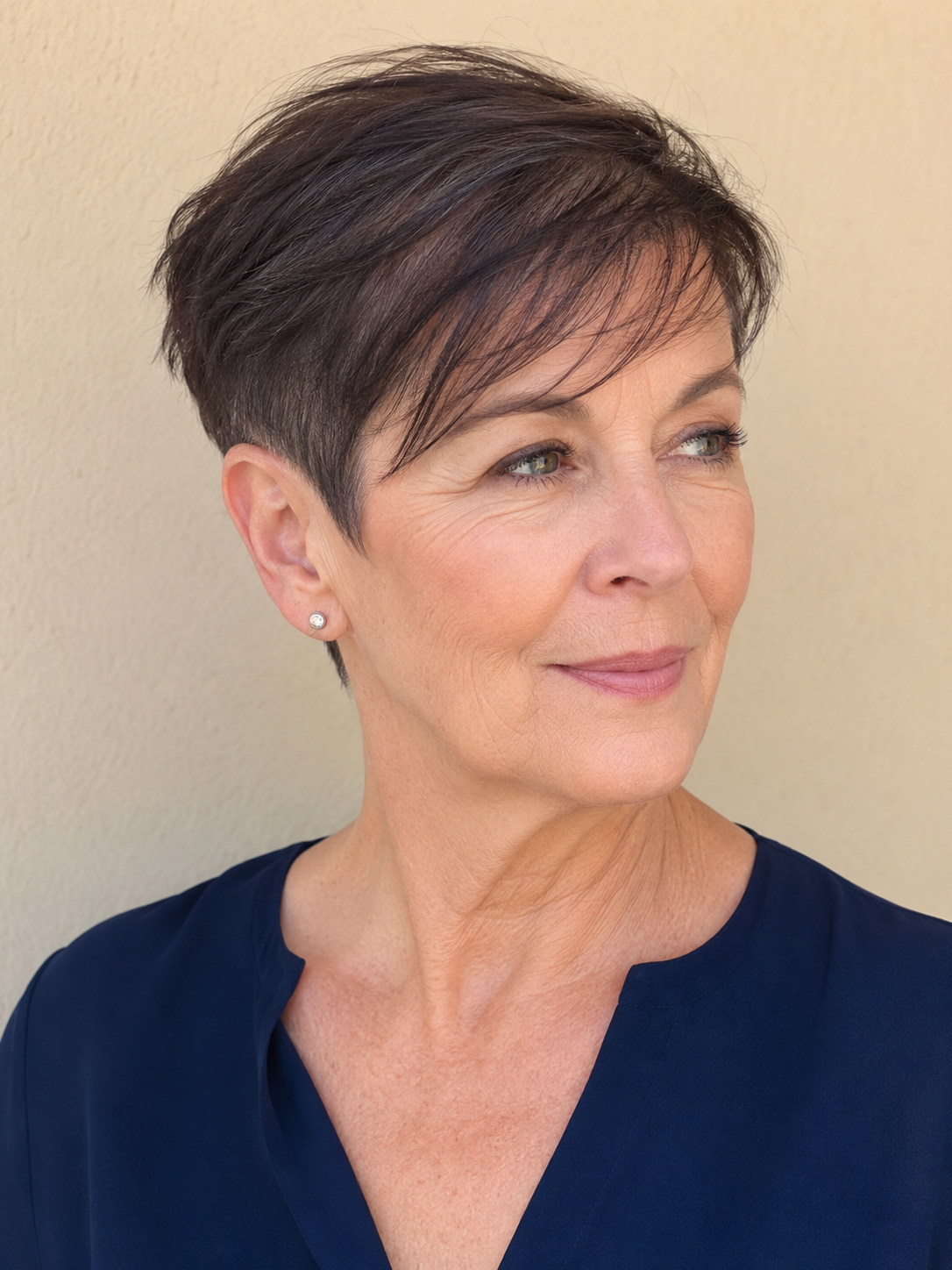
A tapered pixie with significantly more length on top and clean tapered sides. The contrast between the longer top and shorter sides creates apparent volume without exposing thinning. The top section offers styling versatility for different days. Style with a styling paste worked through the top and brushed into the preferred direction. This is one of the most flattering pixie variations for women whose primary concern is exposed scalp at the sides.
Wispy Feathered Pixie
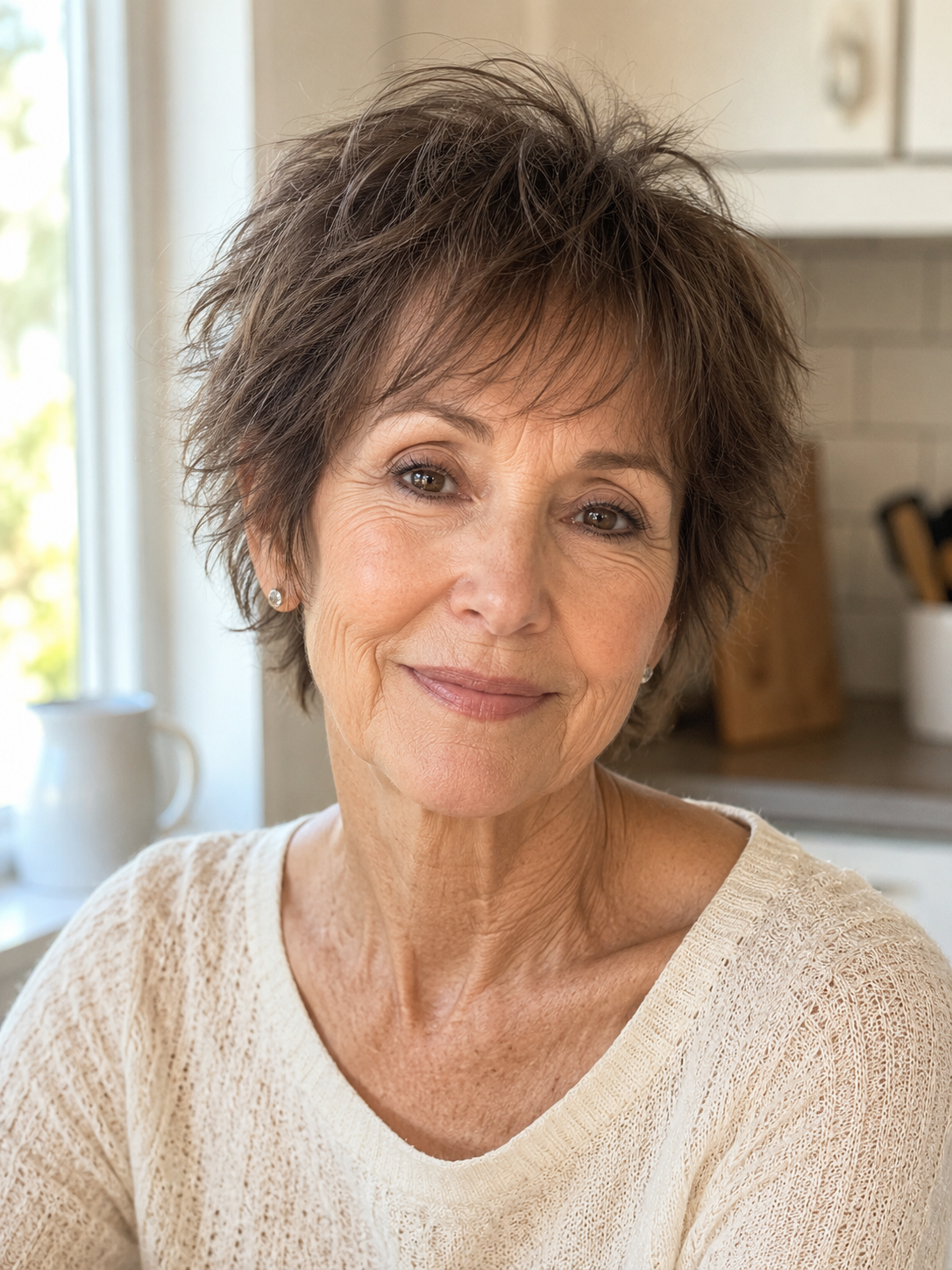
A pixie with delicate wispy feathered ends throughout, designed to prevent the cut from looking heavy or blocky. The feathering creates lightness and lift specifically suited to fine hair. Style with a small amount of texture cream pressed through and finger-shaped. The cut requires precision point cutting throughout. Best for women who want softness around the face and a gentle feminine finish rather than aggressive structured texture.
Choppy Textured Pixie
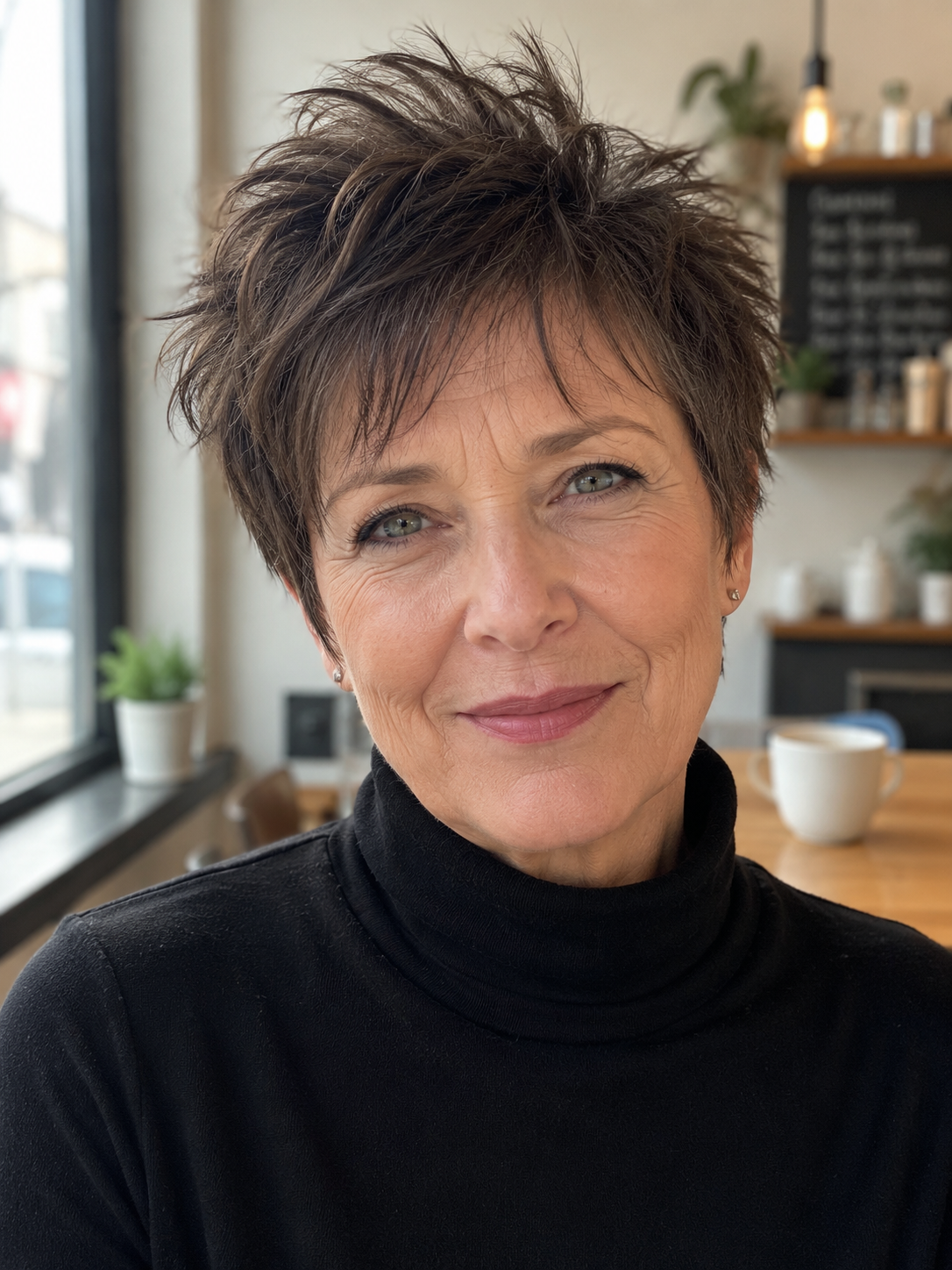
A pixie with deliberate choppy texture concentrated through the top section. The piecey finish creates visual movement that disguises any thinness. Style with a lightweight texturizing spray scrunched through the crown and finger-styled. Skip heavy waxes that flatten the choppy effect within hours. Schedule trims every six weeks to maintain the precise shape. Best for women who want short to read modern and intentional rather than soft and dated.
Pixie With Curtain Bangs
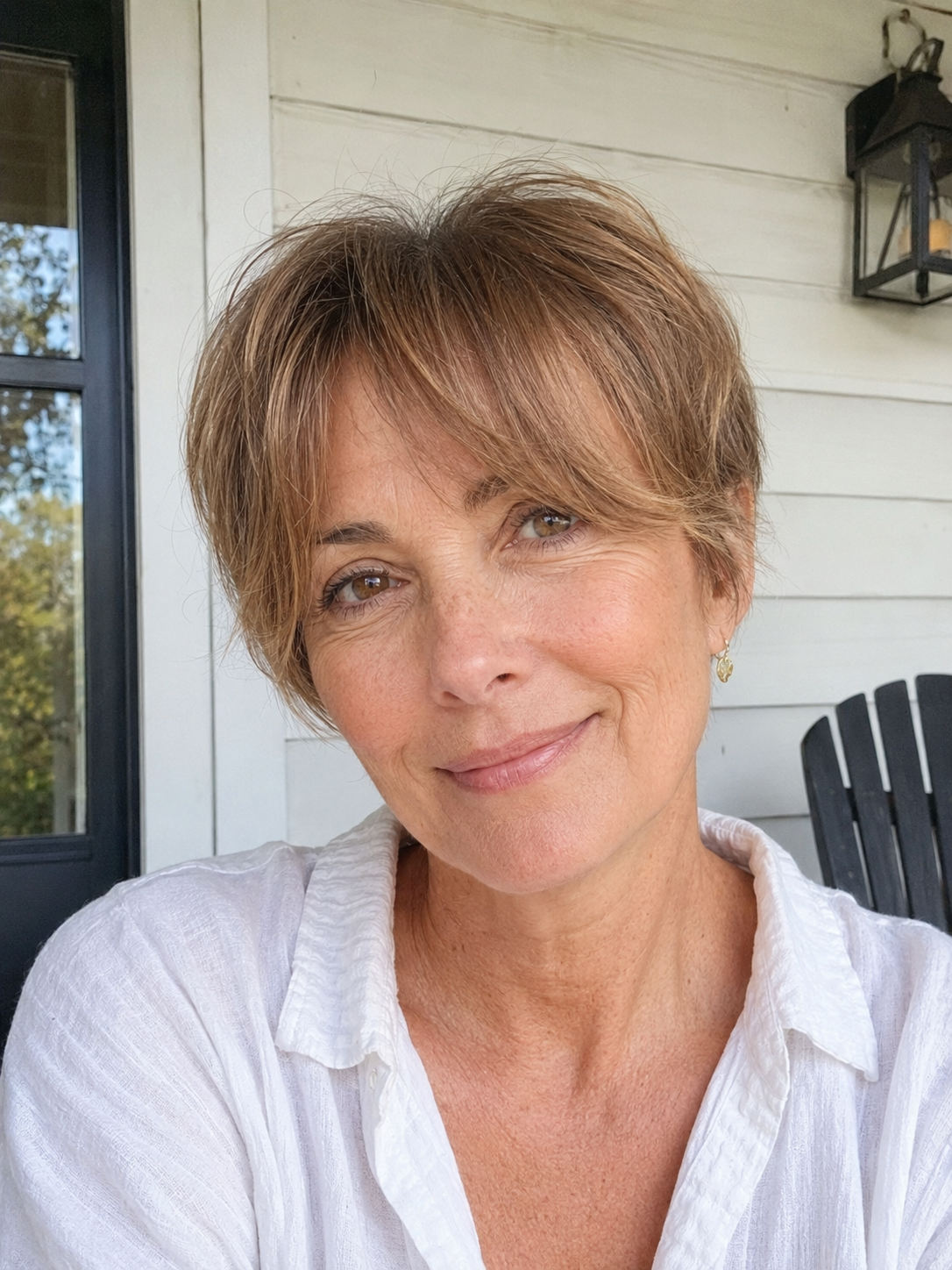
A pixie with curtain bangs splitting at the center and sweeping outward toward the cheekbones. The bangs add visual weight to the front while the cropped sides and back build the volume work. Have the bangs point-cut at the ends. A round brush rolled outward during styling sets the curtain shape. This is one of the most modern combinations on this list and works particularly well for women in their early 50s wanting a contemporary version of the classic pixie.
Pixie With Babylights
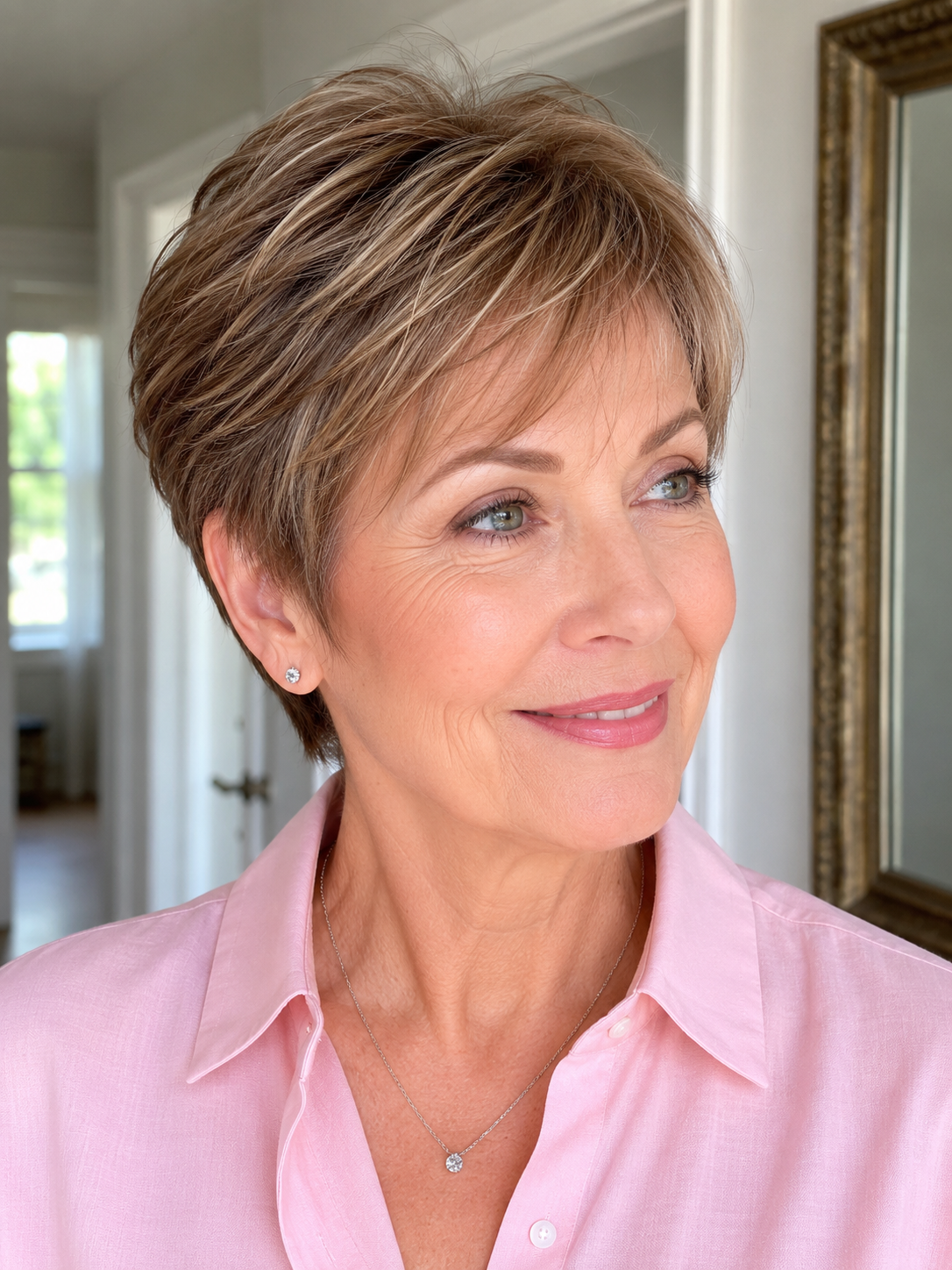
A soft pixie paired with ultra-fine babylights painted in delicate sections throughout. The tonal variation creates dimensional depth that reads as more density than actually exists, which is the most reliable color shortcut for thin fine hair. Use a toning shampoo monthly if the babylights pull warm. Refresh every ten weeks. The technique pairs with most pixie variations and adds visible polish without aggressive contrast.
Pixie With Money Piece
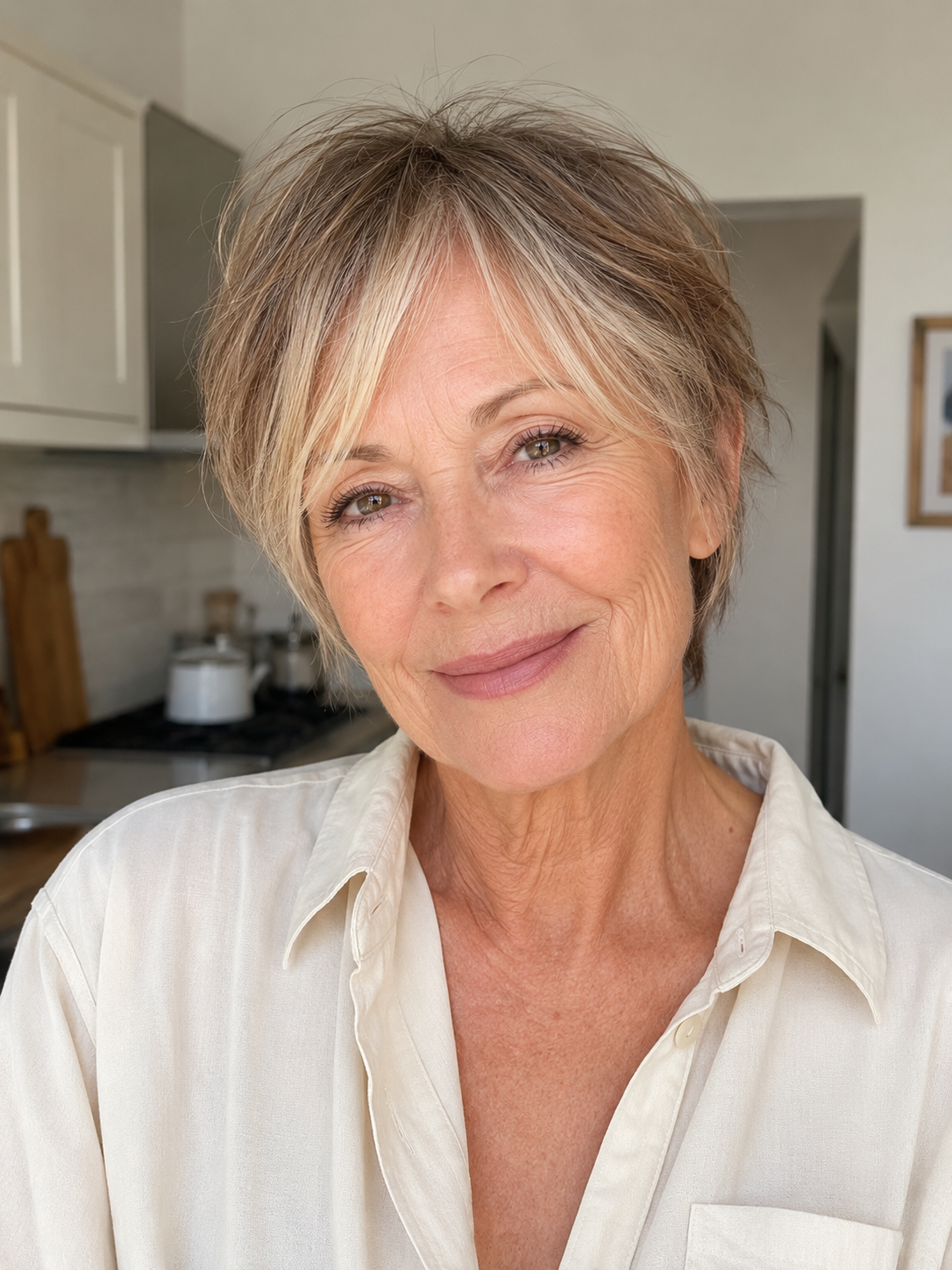
A pixie with money piece highlights brightening the front sections around the face. The brighter pieces draw attention forward and create dimensional contrast that disguises thinning at the temples. Keep the highlights soft and lived-in rather than stark. The combination delivers cut work and color work in one strategic placement. Works particularly well for women in their 50s transitioning between full color and grey.
Pixie With Grey Blending
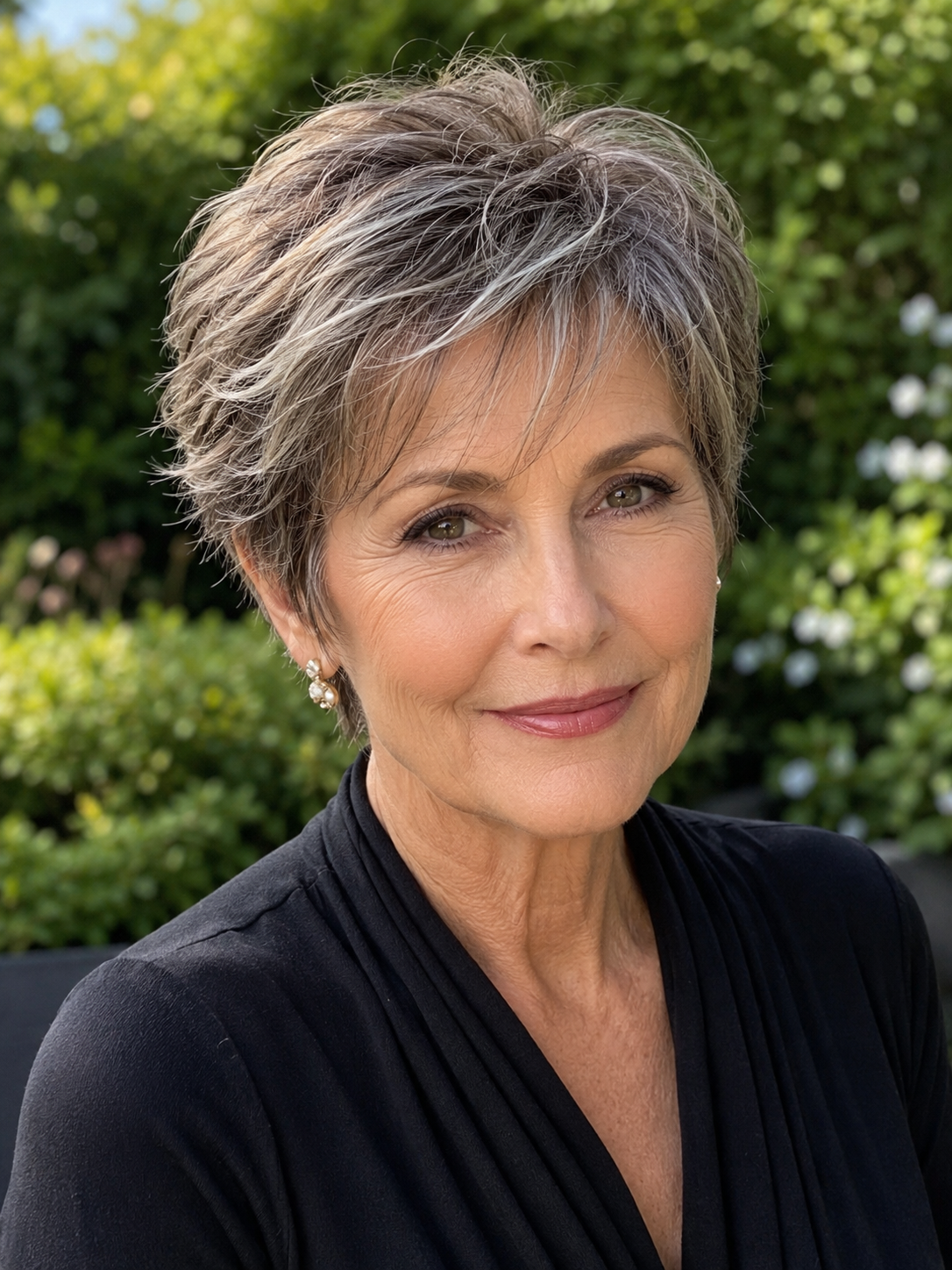
A pixie paired with grey blending highlights woven throughout. The technique creates dimensional camouflage that disguises both incoming grey and thin density at the same time. Best for women whose grey coverage is between 30 and 60 percent. The pixie length showcases the dimensional color clearly. Refresh every ten weeks. This is one of the most efficient options for women dealing with both age-related concerns simultaneously.
Salt and Pepper Pixie
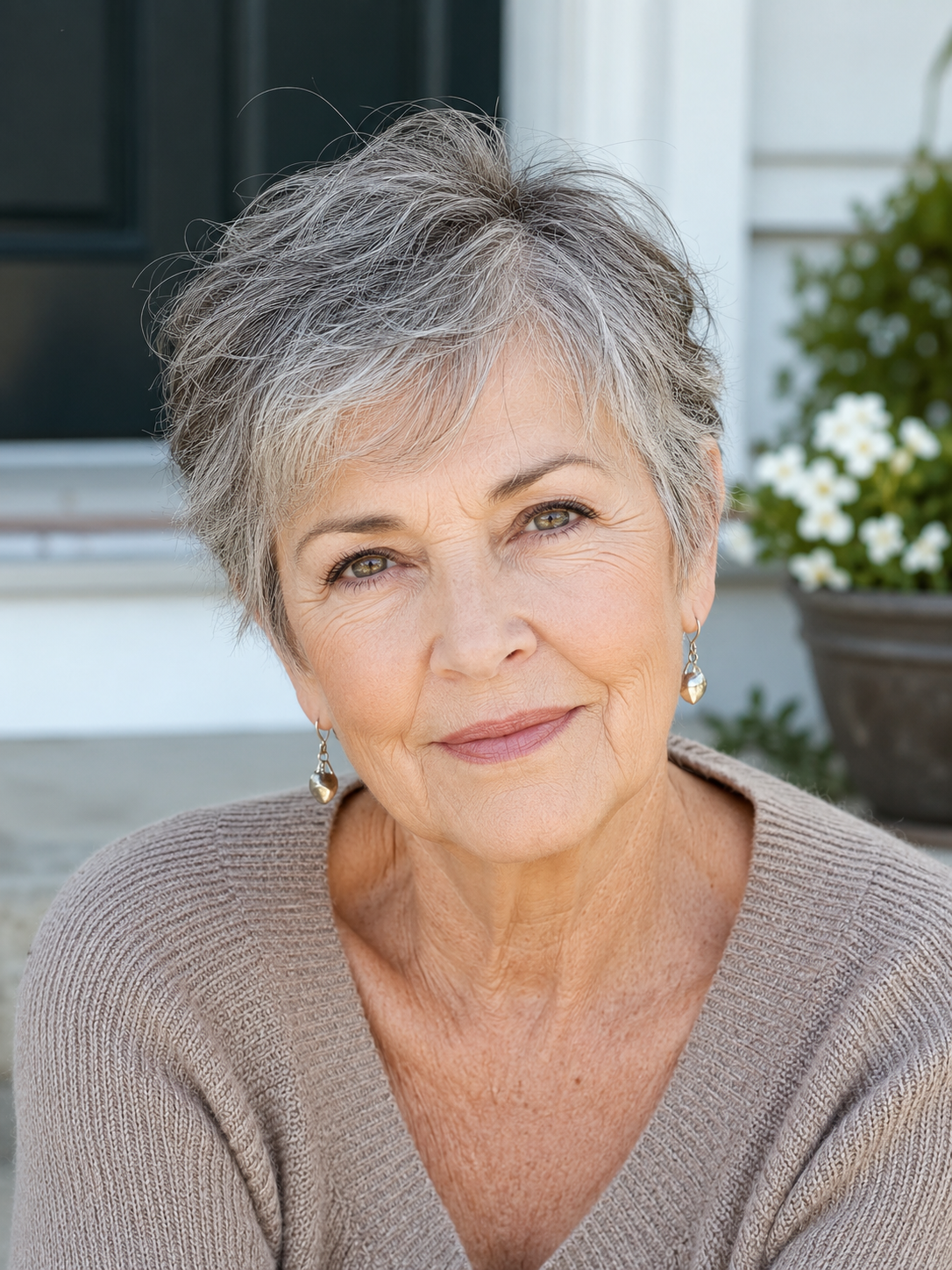
For women fully embracing natural grey, a soft pixie celebrates salt and pepper coloring rather than blending or covering. The mixed tones create natural visual interest that reads as more dimensional than solid color on thin hair. Skip color treatment entirely. Use a purple shampoo every couple weeks to keep the silver portions from pulling yellow. The combination signals a confident relationship with aging.
Asymmetrical Pixie
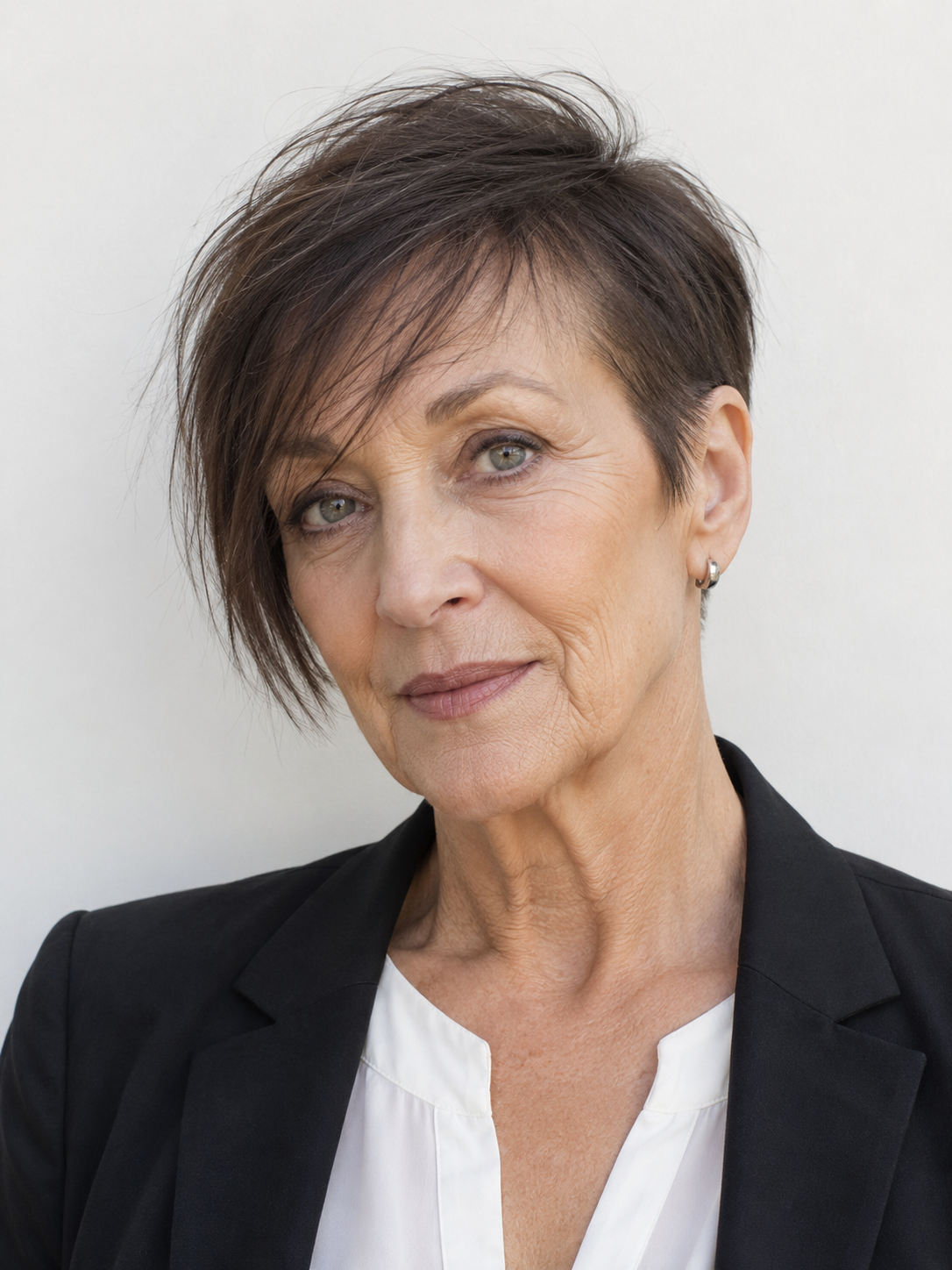
An asymmetrical pixie with one side cut significantly longer than the other. The longer section sweeps across the forehead or covers one ear, balancing the spike height. The asymmetry adds modern edge to what could otherwise be a conservative cut. Style with a flat iron flicking the longer section into place. Works particularly well on women with strong jawlines who want their cut to read fashion-forward.
Pixie With Deep Side Part

A pixie worn with a deeply defined side part. Hair naturally falls flat along its usual part line, and switching to a deep part creates instant visible volume on the heavier side. Style by blowdrying the top section away from the part with a small round brush. Set with a light hairspray at the part. This is the cheapest and fastest volume trick available and pairs with any pixie variation.
Wedge-Shaped Pixie

A wedge pixie shapes the back into a triangular silhouette with the bulk concentrated at the crown. The shape was classic in the 80s but the modern version is gentler and uses interior graduation for the wedge rather than aggressive stacking. Style by blowdrying upward at the crown with a small round brush. Best for women with naturally straight hair and oval or heart-shaped faces. The wedge structure delivers visible architectural volume.
Sleek Brunette Pixie With Side Part

A polished sleek pixie in a natural brunette shade with a clean defined side part. The brunette base provides apparent density that lighter colors can't deliver on thin hair. The side part creates root lift naturally. Style with a smoothing cream worked through and a small round brush. Best for women in their 50s who want a sophisticated low-effort cut that reads professional and refined.
Pixie With Subtle Undercut

A pixie with a hidden undercut beneath the longer top layer. The undercut removes weight that would otherwise pull the top section flat, giving the visible cut more lift naturally. Position the undercut where it stays hidden when hair falls into place. Style with a styling paste worked through the longer top and finger-styled. This works particularly well for women whose fine hair tends to lie close to the head despite cutting techniques.
Slicked-Back Pixie

A pixie pushed back from the forehead in a sleek finish. The clean silhouette emphasizes cheekbones and eyes, which compensates visually for thin hair drawing attention to itself. Style with a styling gel or strong-hold pomade worked through damp hair, then comb back smoothly. Set with hairspray to maintain the shape. Best for women with strong bone structure who want a refined statement style and don't mind committing to the styling routine.
Side-Swept Blonde Pixie With Fringe

A pixie in a lighter blonde shade with side-swept layers and a longer fringe section. Lighter colors can read airier on thin fine hair when paired with the right cutting technique, creating a softer overall impression. The longer fringe and side sweep maintain length around the face while the crown stays cropped for volume. Apply mousse from roots to ends and blow dry with a vent brush.
Soft Salt and Pepper Pixie

A softer take on the salt and pepper variation, with longer top layers and a slightly less defined cut overall. The softness suits women who want a confident grey but with gentler overall styling than the modern crisp salt and pepper variant. Style with a light styling cream worked through and finger-shaped. Best for women in their 60s who want their natural color celebrated within a forgiving traditional pixie silhouette rather than an aggressive editorial cut.