15 Volumizing Pixie Cuts That Solve the Thin Hair Problem After 50
Stylists at established salons all say the same thing about volume on thin hair. It starts in the cut, not the styling. Steven Picciano of Goldwell puts it most directly: leave length and weight on top while tapering the perimeter. That single principle separates a pixie that delivers visible fullness from one that exposes thinning instead of disguising it. The cuts below all apply that rule differently. Some use V-shape point cutting across the top for floating pieces. Others rely on choppy texture concentrated specifically at the crown. A few depend on color techniques like babylights and balayage that trick the eye into perceiving more density than actually exists. One or two work only with the right blow-dry routine.
Jump to:
- Layered Pixie With Crown Volume
- Choppy Textured Pixie
- Pixie With Longer Top and Tapered Sides
- Pixie With Side-Swept Bangs
- Razored Shaggy Pixie
- Pixie With V-Shape Point Cutting
- Asymmetrical Pixie
- Pixie With Babylights
- Pixie With Balayage
- Tousled Wavy Pixie
- Pixie With Curtain Bangs
- Pixie With Crown Layering and Smooth Sides
- Pixie With Wispy Face-Framing Pieces
- Pixie With Deep Side Part
- Pixie With Feathered Piece-Y Ends
Layered Pixie With Crown Volume
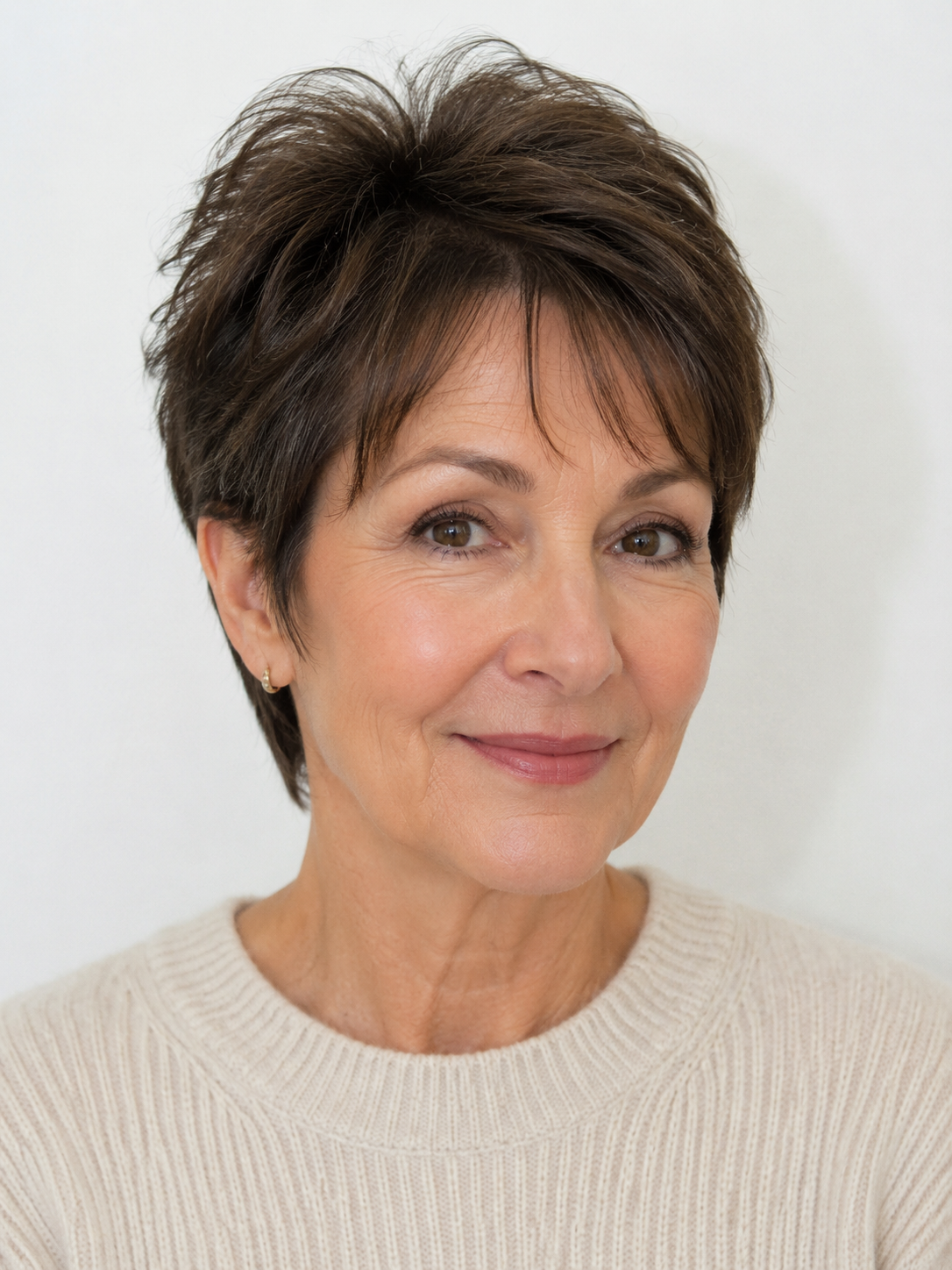
This is the foundation cut for volumizing thin hair after 50. The top stays longer than a traditional pixie, with layering concentrated specifically at the crown to build lift. Tapered sides keep the perimeter clean. Style by blowing dry upside down for root lift, then flipping back and finger-styling into shape. A volumizing mousse worked into damp roots gives the lift staying power. The shape itself does most of the work once cut correctly.
Choppy Textured Pixie
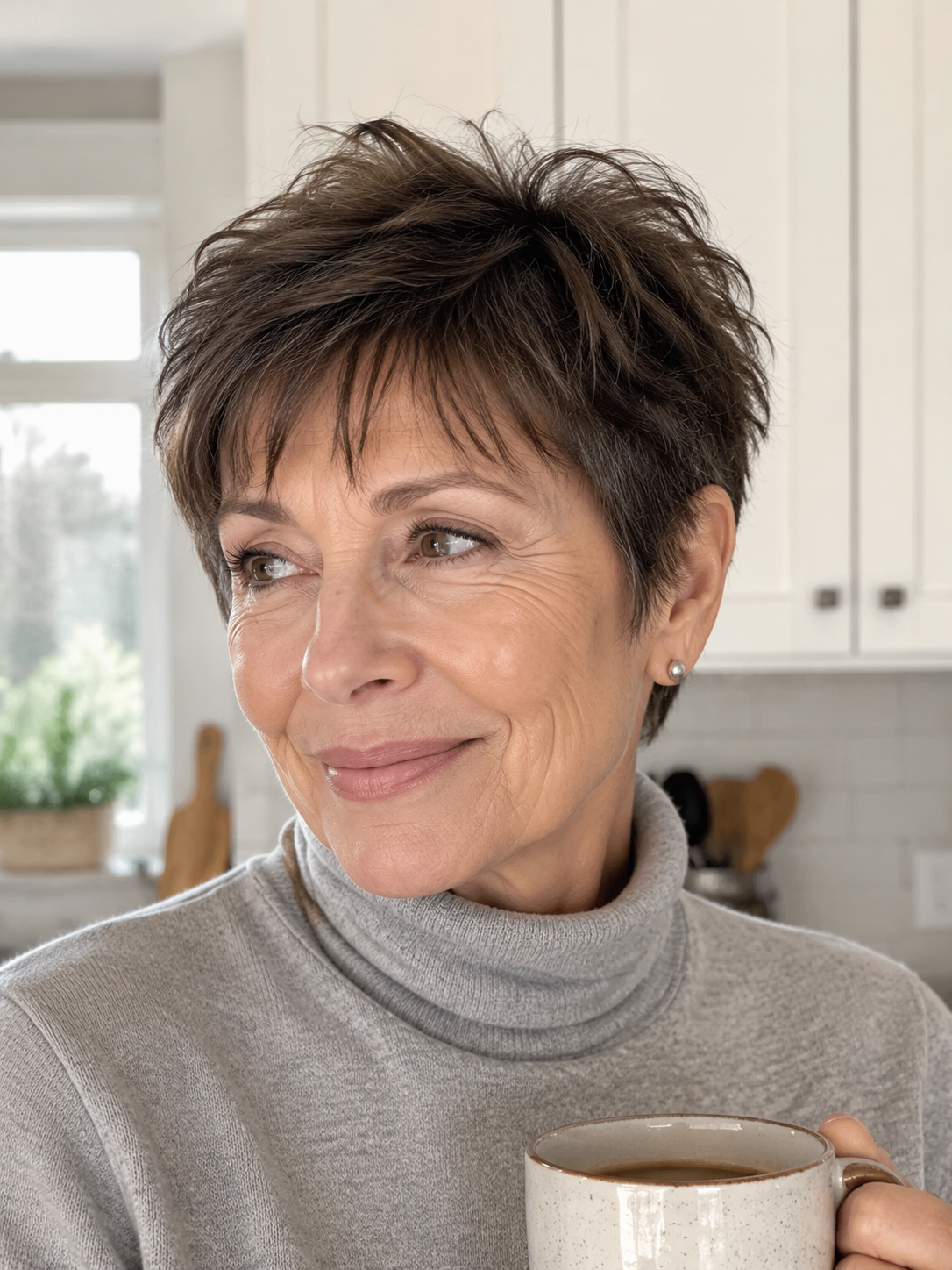
Celebrity stylist Jason Collier recommends choppy layers as the direct fix for hair that lacks volume. The choppy texture concentrates through the top with the sides kept tighter. The piecey finish creates visual movement that disguises any thinness. Style with a lightweight texturizing spray scrunched through the crown and finger-styled. Skip heavy waxes that flatten the choppy effect within hours. Schedule trims every six weeks to maintain the precise shape.
Pixie With Longer Top and Tapered Sides
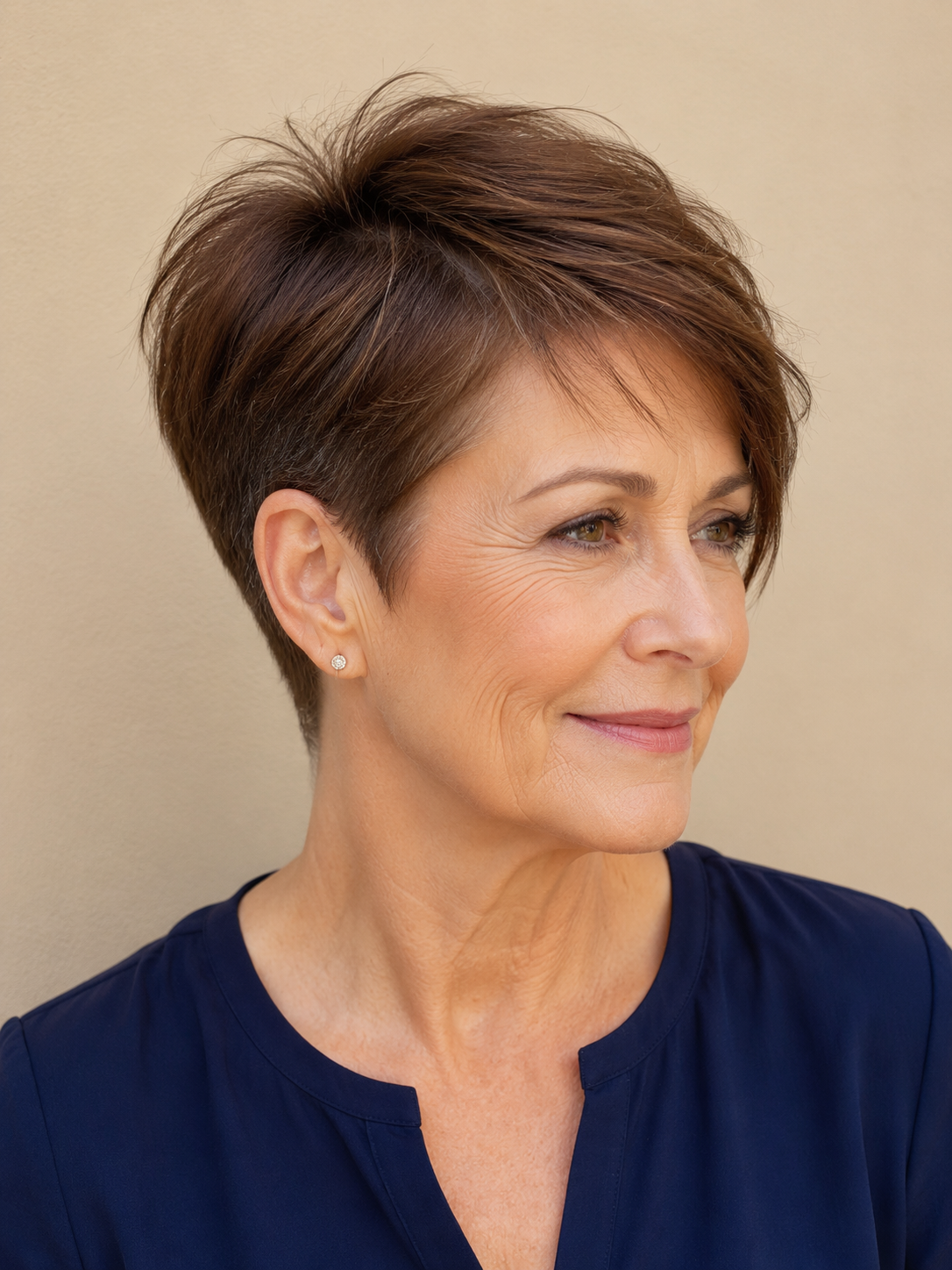
The cut that follows Picciano's principle most directly. Significantly more length is left on top to provide weight and shape, with the sides tapered cleanly down. The contrast creates apparent fullness without exposing the scalp. Style with a paste worked through the longer top and brushed into the preferred direction. The longer top section also lets you switch styling on different days, which adds versatility uncommon in shorter pixies.
Pixie With Side-Swept Bangs
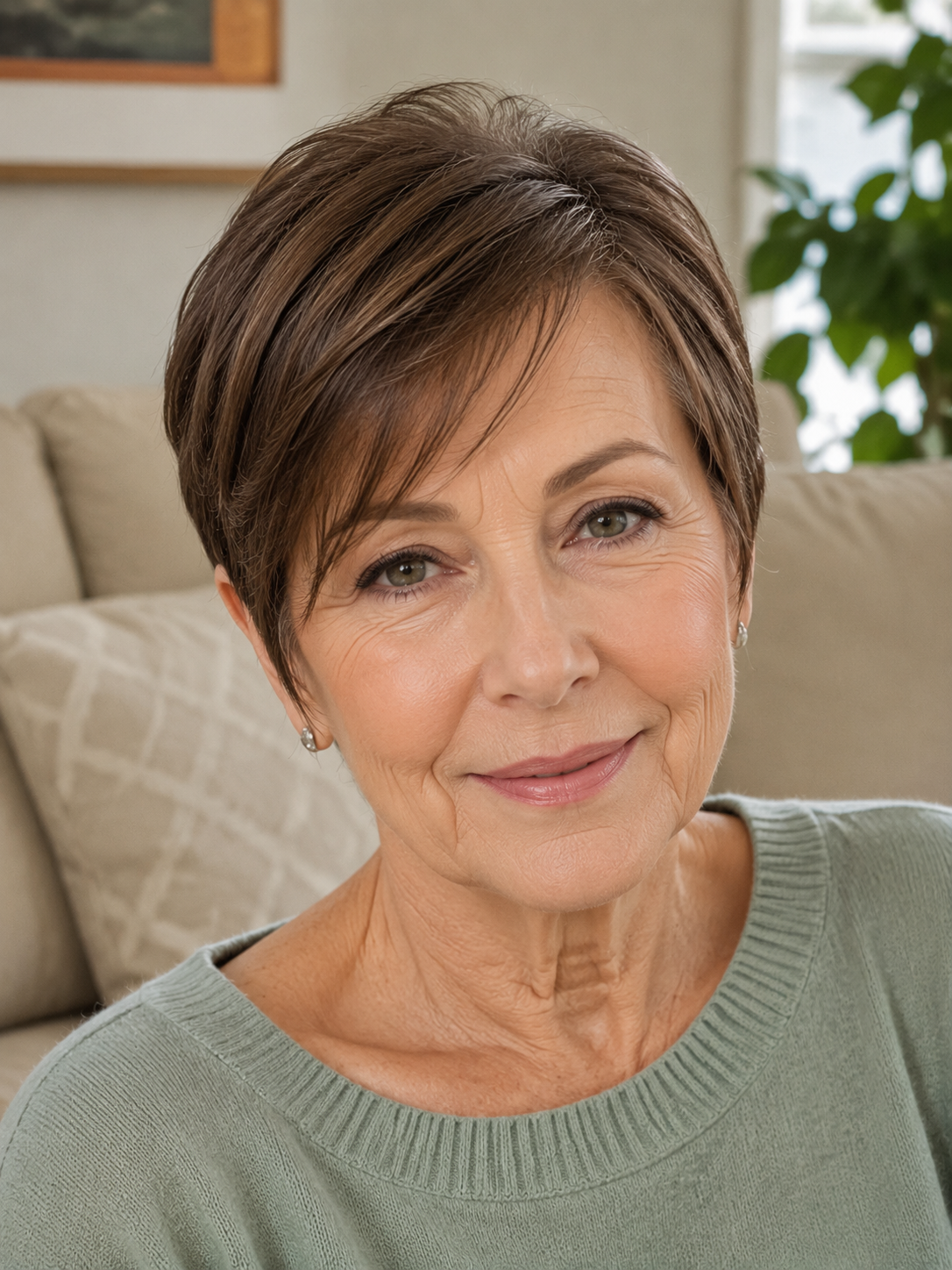
Side-swept bangs angle from a deep side part across the forehead toward the opposite temple. The bangs add visual weight to the front and disguise any thinning at the temples and hairline simultaneously. Style by blowdrying with a round brush in the direction of the sweep. Set with a light hairspray at the part. Among the most universally flattering combinations on this list and a safe starting point for women new to pixies.
Razored Shaggy Pixie
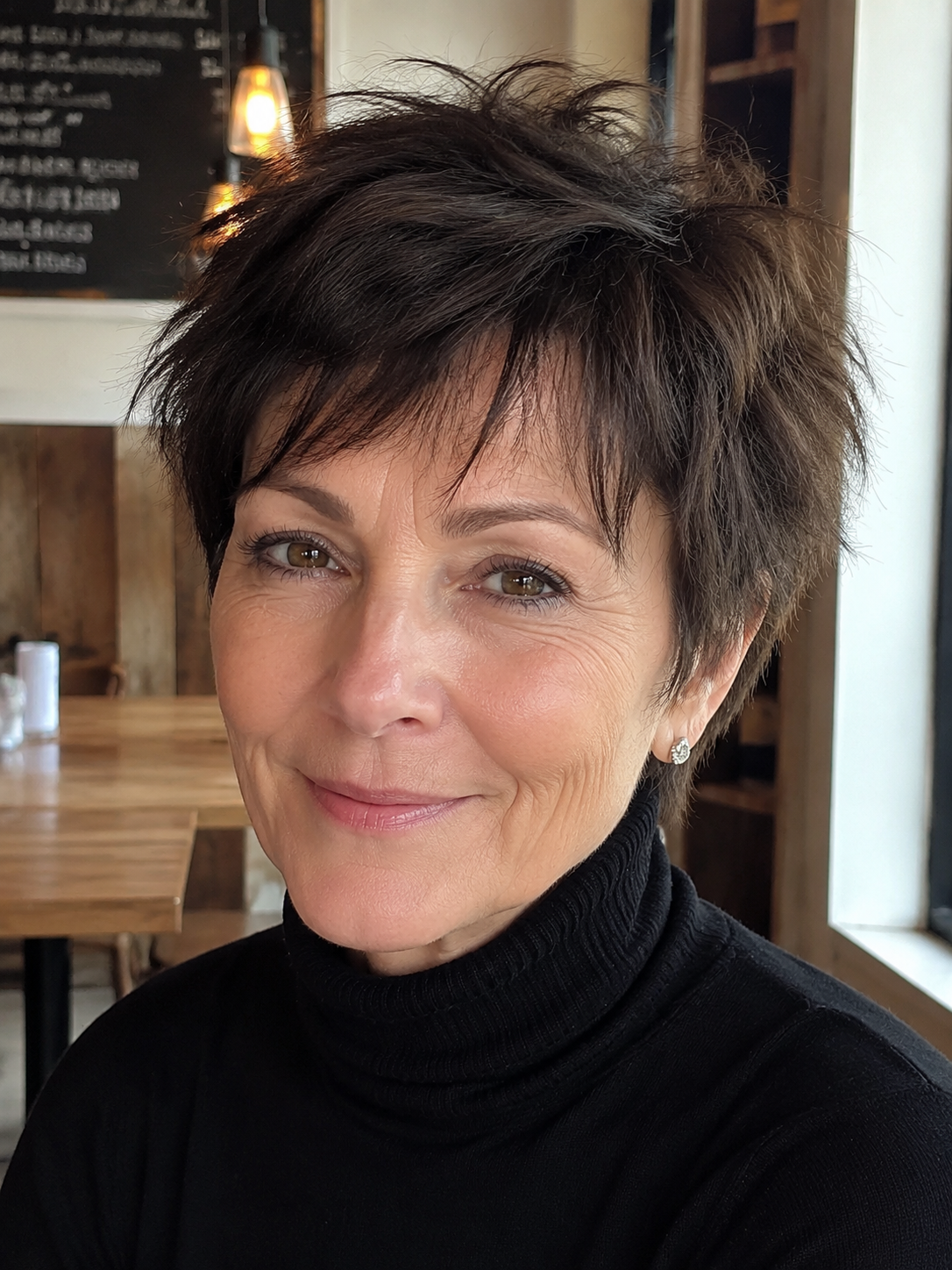
A razored pixie uses light razor work to create soft texture without removing weight aggressively. The soft texture builds movement that fakes density. The shaggy finish reads modern and lived-in rather than dated. Have the razor work concentrated through the top and crown. Style with sea salt spray scrunched through damp hair, then either air-dry or use a diffuser. Avoid over-brushing once dry, which flattens the deliberate texture.
Pixie With V-Shape Point Cutting
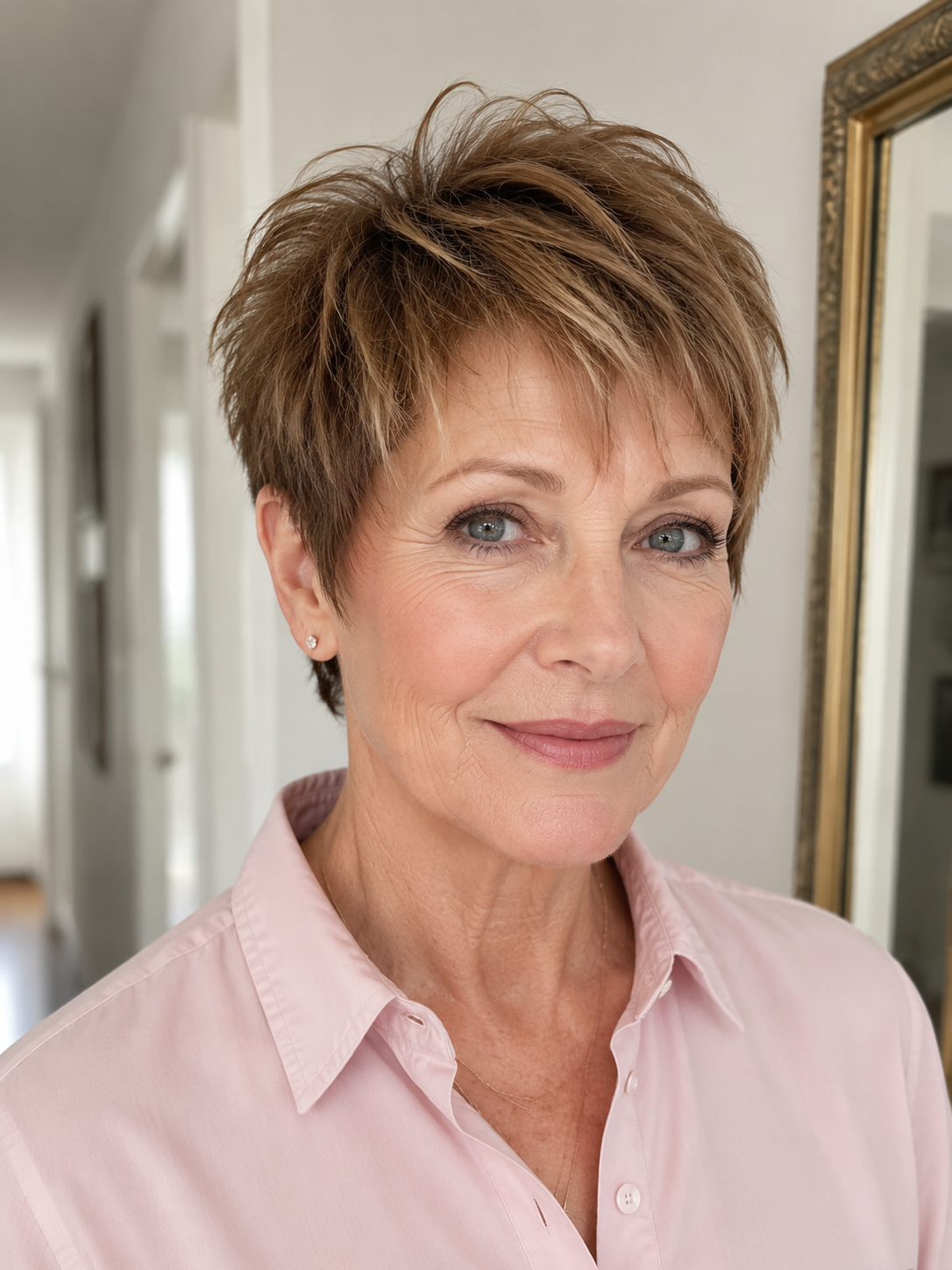
Stylist Teresa Romero from Sam Villa Company recommends deliberate V-shape point cutting across the top and through the fringe to create movement and depth. The cutting technique is specific and requires asking your stylist for it by name. The result is floating pieces that catch the light and add apparent density. Style with a lightweight styling cream and finger-styling. Find a stylist experienced specifically with point-cutting techniques rather than traditional layering.
Asymmetrical Pixie
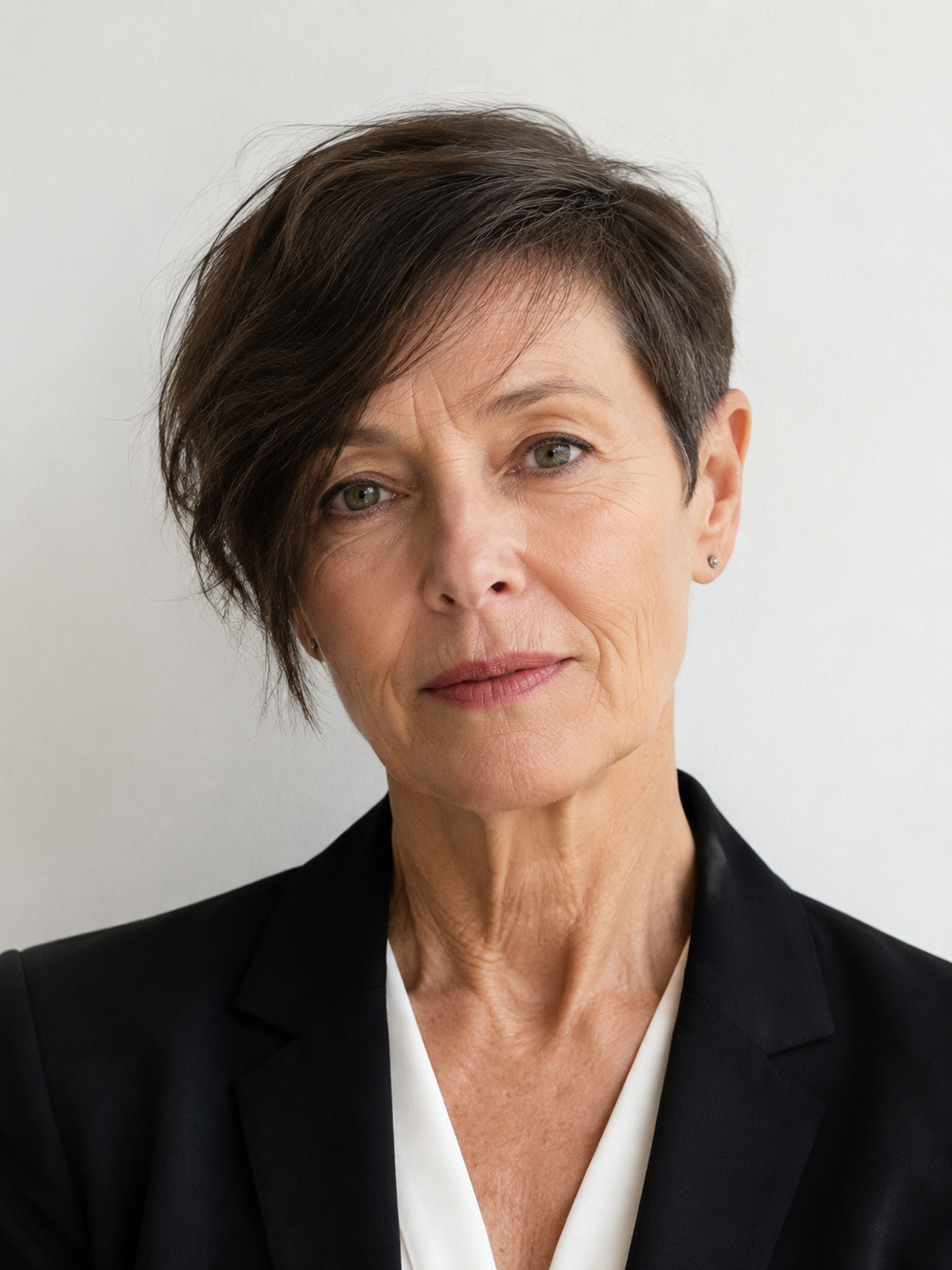
An asymmetrical pixie cuts longer on one side than the other, with the longer section sweeping across the forehead. The asymmetry adds visual drama that pulls attention away from any thinning. The longer side creates the illusion of more hair simply by occupying more visual space. Style with a flat iron flicking the longer section into place, then a light hold hairspray. Works particularly well on women with strong jawlines or angular features.
Pixie With Babylights
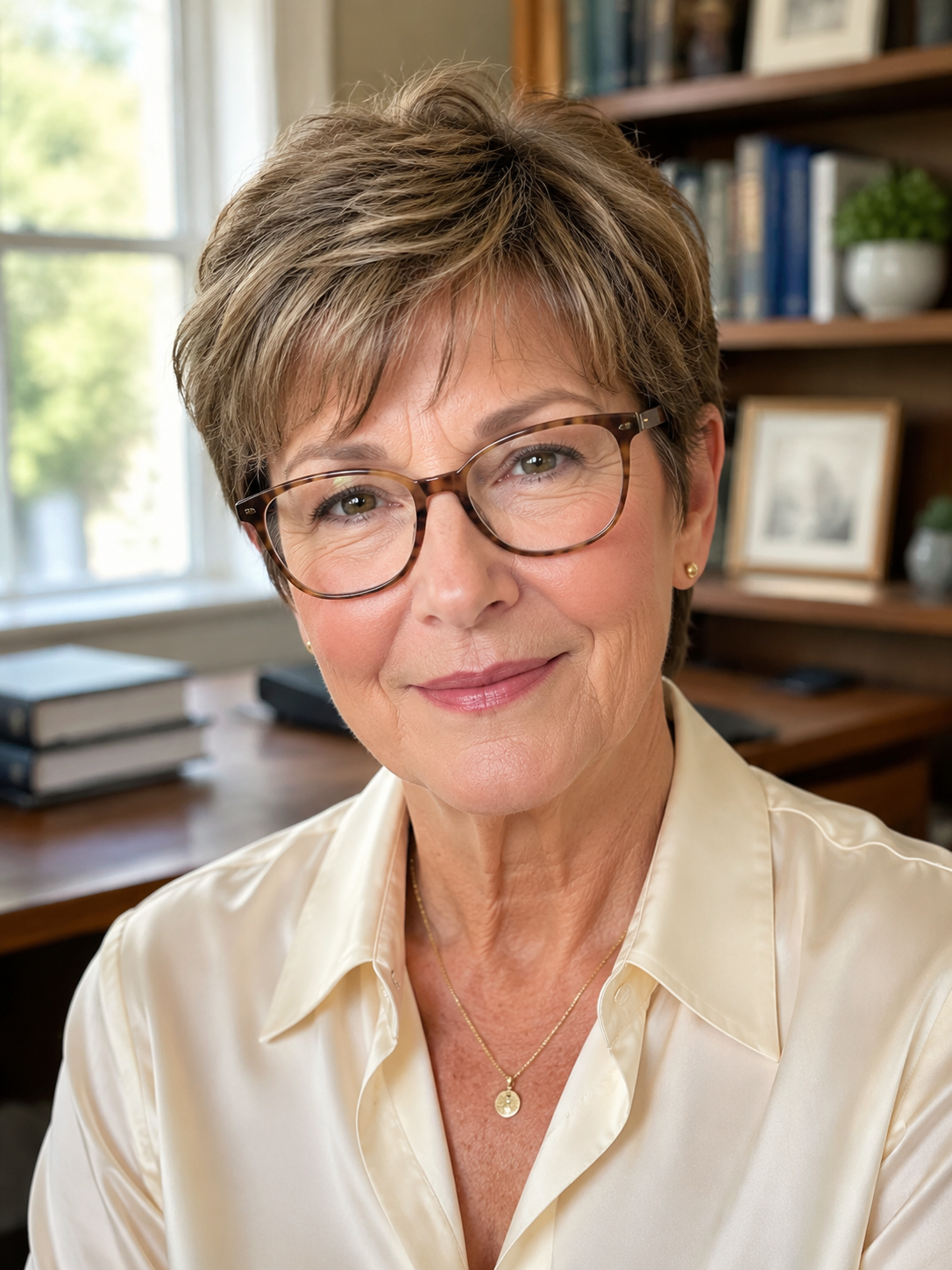
Babylights are ultra-fine highlights painted in delicate sections to add dimensional brightness without harsh contrast. The Numi salon team in Scarsdale points out that dimensional color creates visual depth that makes the eye perceive more volume than actually exists. On thin pixies, this perception gap is the most reliable shortcut to apparent fullness. Use a toning shampoo monthly if the babylights pull warm. Refresh every ten weeks.
Pixie With Balayage
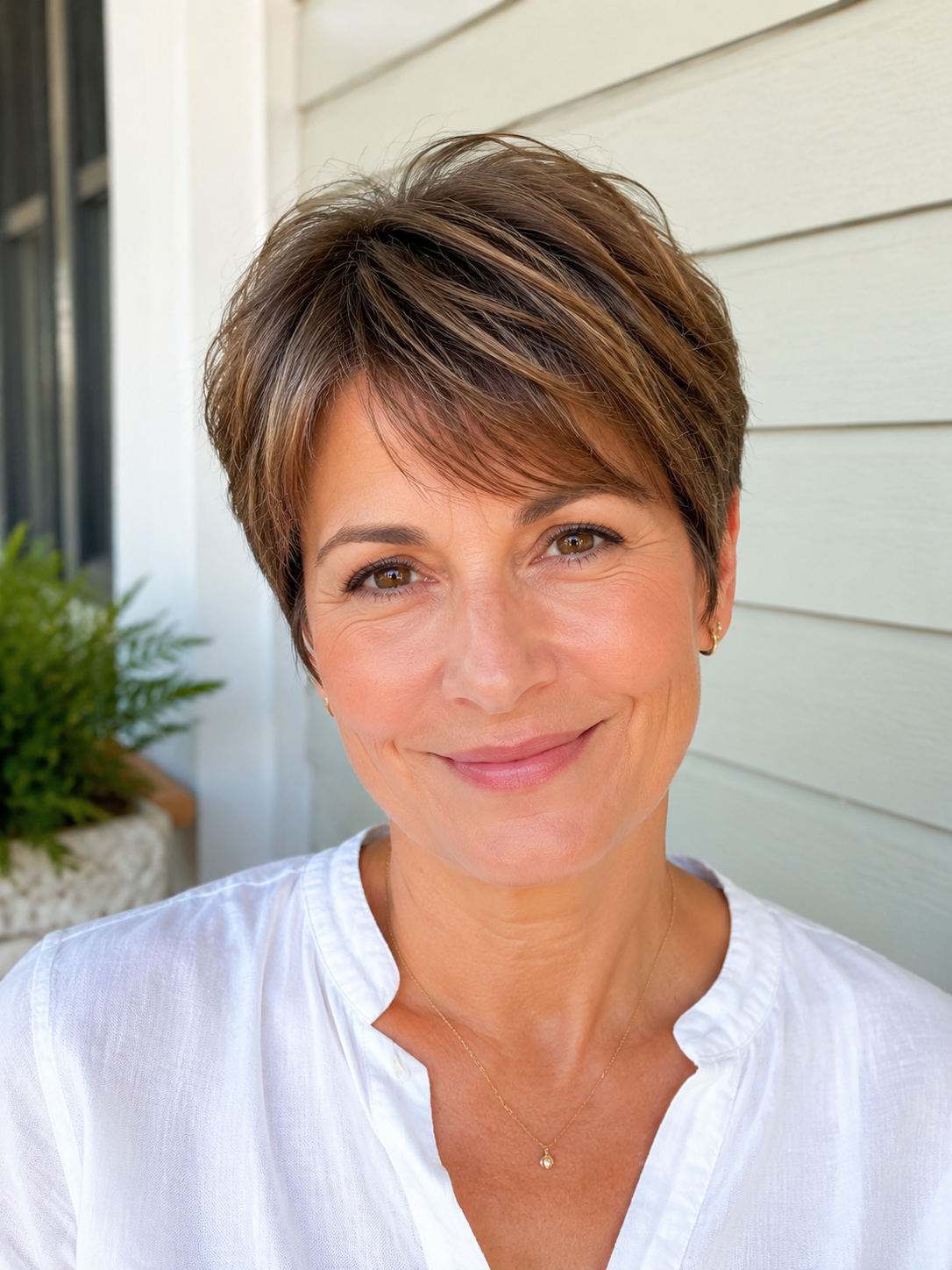
Balayage paints color freehand for soft dimensional placement that creates depth across the entire cut. On pixie lengths, balayage works through the top and surface layers where the color shows most. The graduated tone adds apparent thickness without any cutting technique. Pair with any pixie variation for added polish. Best as a soft lived-in finish rather than aggressive contrast, which can age the cut.
Tousled Wavy Pixie
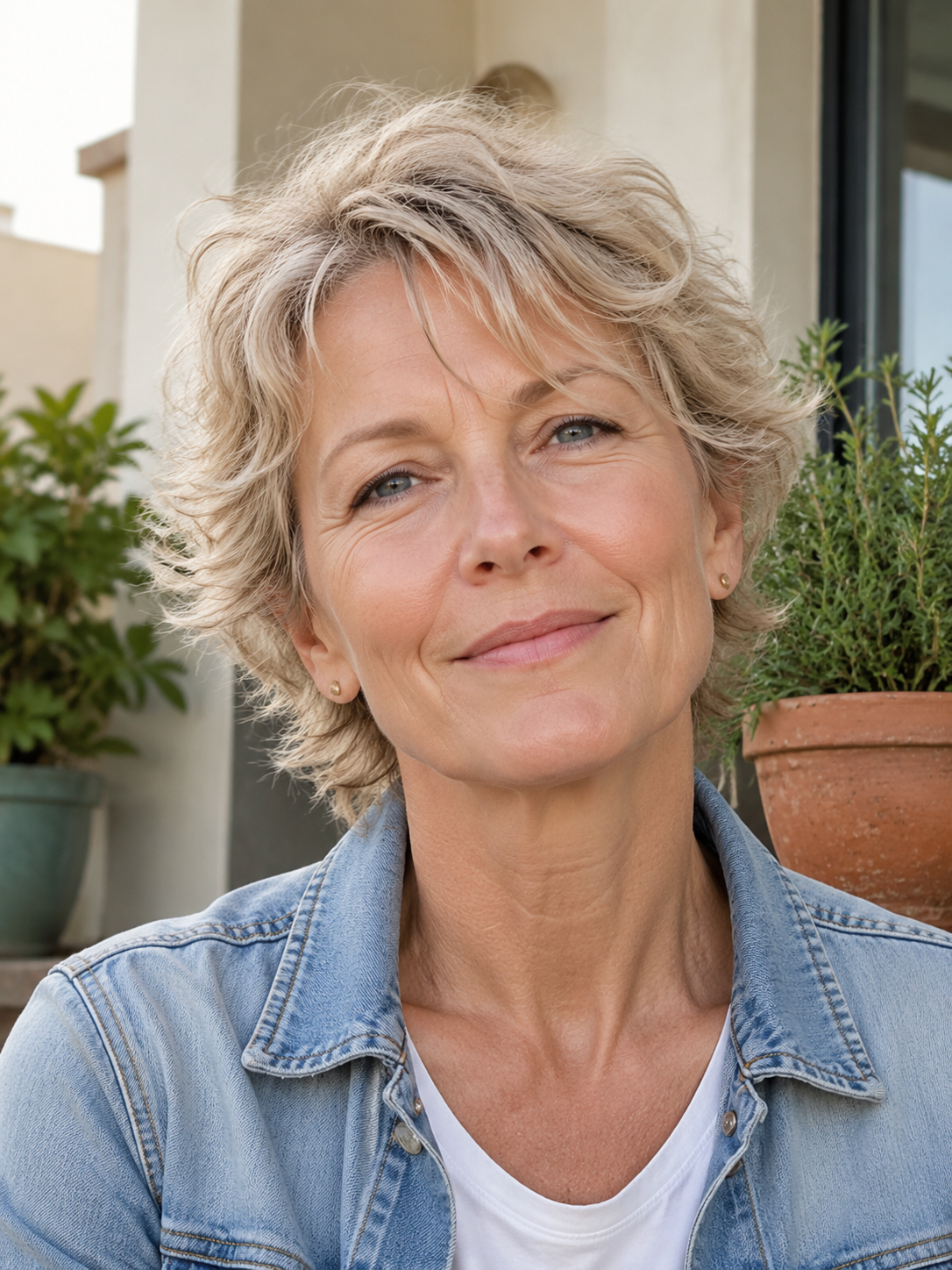
Wavy texture worked into a pixie adds movement and apparent density at the same time. Sea salt spray applied to damp hair, scrunched in sections, then either air-dried or diffused gives the natural wave pattern. The waves build visual fullness that flat thin hair lacks. Add definition to a few face-framing pieces with a small curling wand if needed. Best for women willing to invest five to ten minutes in styling.
Pixie With Curtain Bangs
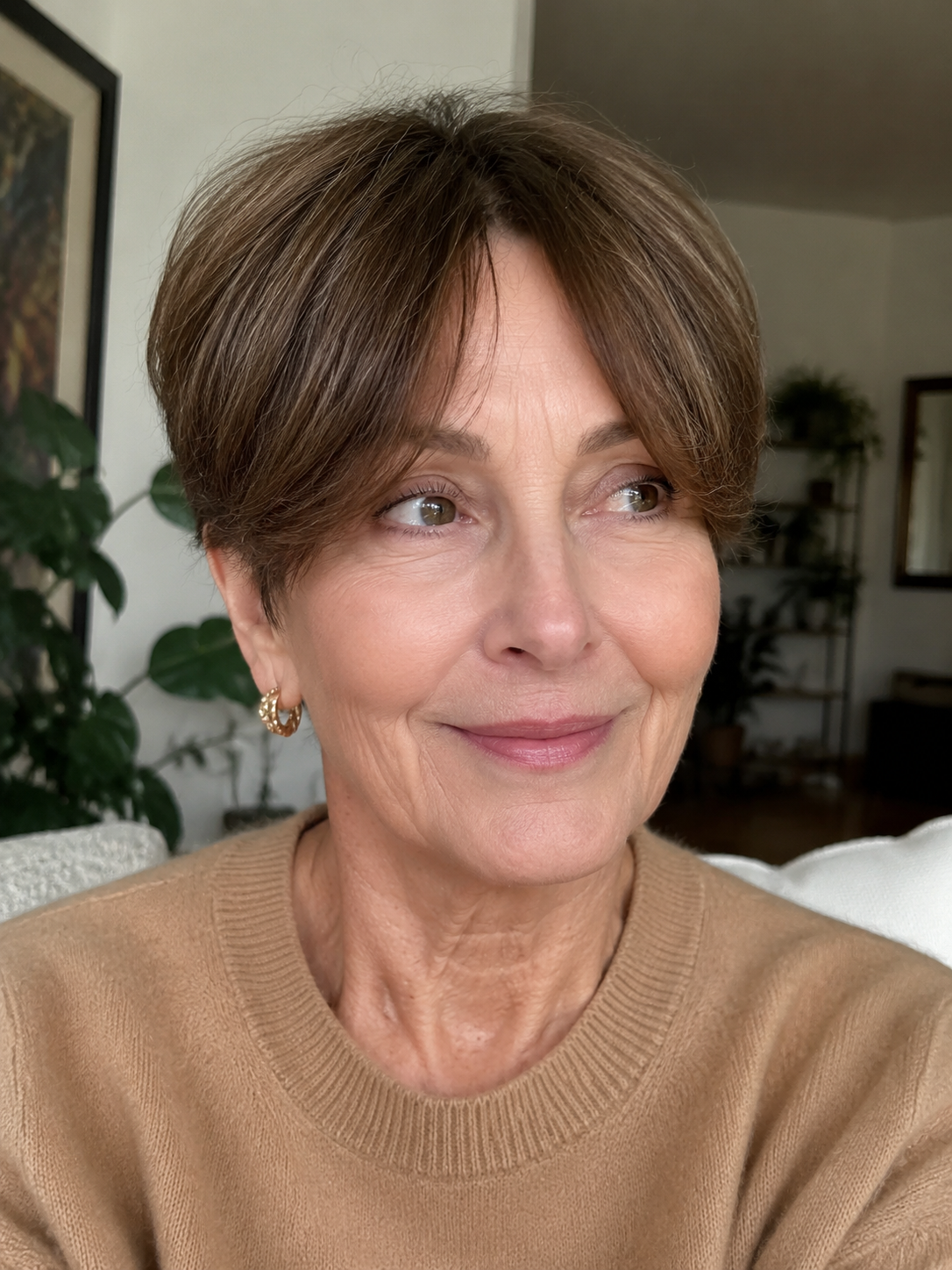
Curtain bangs split at the center and sweep outward toward the cheekbones. The shape softens the forehead and adds visual weight to the front of the silhouette, which compensates for thin hair losing volume by midday. Have the bangs point-cut at the ends to integrate softly. Style by blowdrying with a round brush rolled outward. A finishing spray maintains the curtain shape through the day.
Pixie With Crown Layering and Smooth Sides
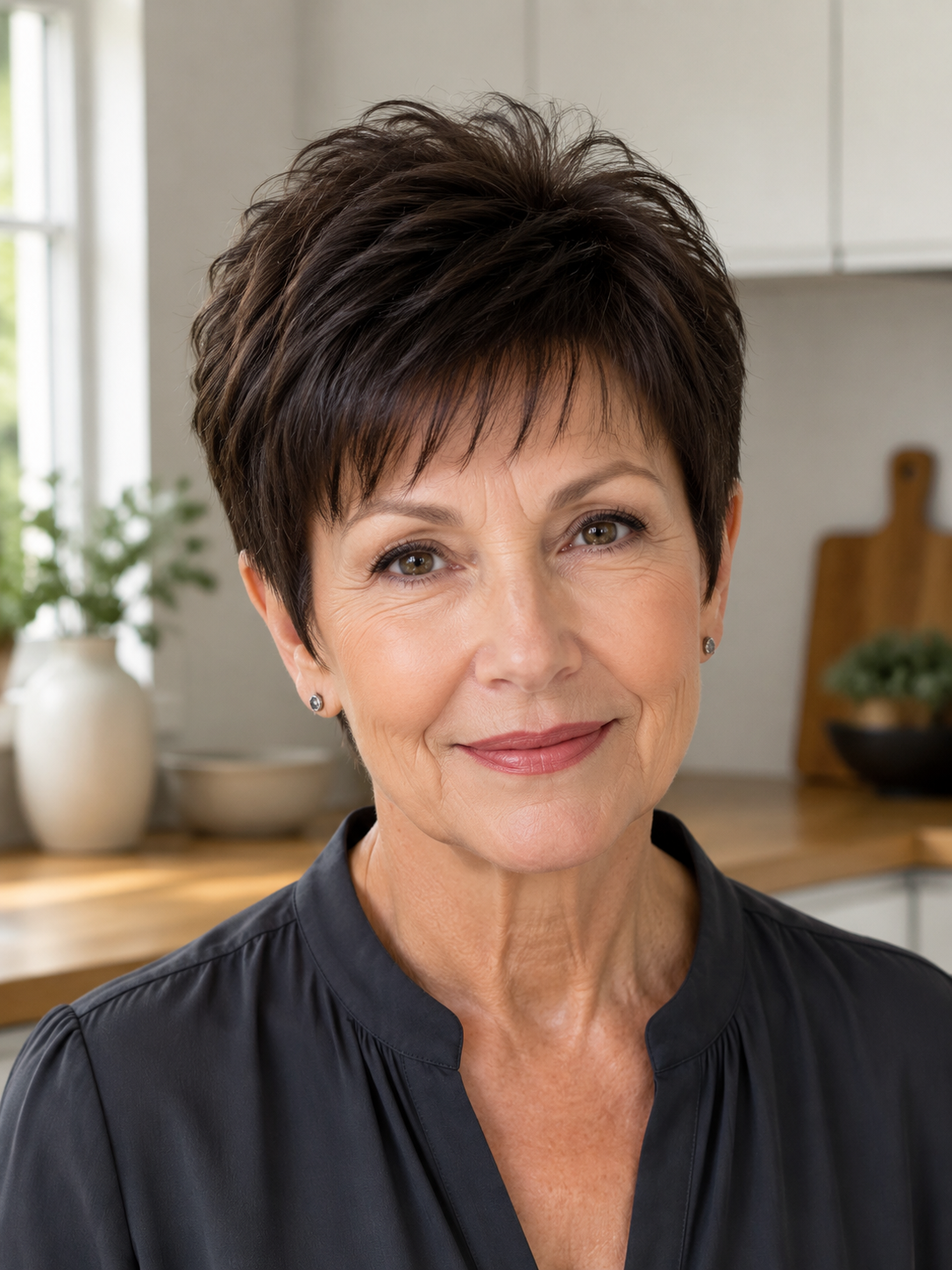
This combination uses noticeable layering at the crown for height paired with smooth controlled sides for contrast. The mixed finish creates dimension within a polished silhouette. Style by lifting the crown sections with fingers during blowdrying, then smoothing the sides with a flat brush or paddle brush. Set with a light hairspray. One of the most professional-looking options on this list and ideal for office or formal settings.
Pixie With Wispy Face-Framing Pieces

Wispy pieces around the face create movement and soften the cut without the bulk of full bangs. Have your stylist point-cut these pieces specifically for the wispy effect. Style with a small amount of texture cream warmed between fingers and pressed through to keep them piecey rather than fluffy. The technique works particularly well alongside a longer-top pixie, providing softness around the face while the crown does the volume work.
Pixie With Deep Side Part

The Numi salon team points out that hair naturally falls flat along its usual part line, and switching the part creates instant visible volume on the heavier side. A deep side part on a pixie takes advantage of this fully. Style by blowdrying the top section away from the part with a small round brush. Set with a light hairspray at the part to maintain the lift. This is the cheapest and fastest volume trick on the list.
Pixie With Feathered Piece-Y Ends

Feathered piece-y ends throughout the cut create soft movement and visual lightness that flatters thin hair. The feathered technique uses graduated layering with point-cut ends. Style by finger-combing damp hair with a lightweight styling cream, then air-drying or rough-drying without manipulation. The feathered finish reads gentle and modern rather than dated. Suits women who want softness without sacrificing the volume work happening at the crown.